Our Hospital RCM services help healthcare organizations optimize revenue through accurate coding, claims management, compliance support, and denial prevention. We streamline complex hospital billing workflows to improve reimbursements, reduce revenue leakage, and support long-term financial performance.
Verifying Cigna eligibility before every visit is one of the simplest habits that keeps denials off your books. Cigna Healthcare runs commercial, Medicare Advantage, and Medicare Supplement products, and each carries its own verification quirks that a rushed front-desk check can easily miss.
This guide walks through exactly what to check, how to check it, and where Cigna’s recent updates to its electronic eligibility system change what your team should expect from a standard response.
Eligibility verification confirms that a patient’s Cigna plan is active and applicable for the specific date they’re being seen. It’s the first checkpoint in the revenue cycle, and skipping it tends to cost far more time later in the form of denials and appeals.
An active Cigna ID card by itself doesn’t guarantee payment. The provider could be out of network for that particular plan, the service could require prior authorization, or a benefit limit could already be exhausted for the year.
Eligibility vs. benefits verification: Eligibility confirms the plan is active. Benefits verification tells you what that plan actually pays for — deductibles, copays, coinsurance, and any plan-specific limitations.
Eligibility vs. prior authorization: These are two separate gatekeepers. Confirming eligibility never confirms that Cigna has pre-approved a specific service, and mixing the two up is a common, preventable source of denials.
Cigna’s electronic eligibility responses return active coverage status, effective and termination dates, deductible and copay amounts, coinsurance, and benefit limitations — a genuinely detailed data set when your team reads the full response instead of just the coverage flag.
Skipping or rushing this check is a leading cause of avoidable denials, and those denials almost always resurface later as appeals, resubmissions, or write-offs your billing team has to chase down.
Confirming coverage before the visit also gives your team the chance to tell the patient what they’ll owe upfront. That single step prevents the surprise-bill conversation that damages trust and slows down collections.
It protects cash flow too — fewer denials and less billing rework keep your reimbursement timeline predictable instead of stuck in an appeal queue.
Accurate front-end data is what makes a Cigna eligibility check reliable. A mistyped member ID or a card photo that’s out of date is often enough to return an inaccurate result.
Collect the patient’s full legal name, date of birth, and current address, along with their Cigna member ID and group number exactly as printed on the card. A photo or scan of both sides of the insurance card should be standard intake practice, since Cigna’s provider portal also allows staff to pull up a digital version of the patient’s ID card once identity is confirmed.
You’ll also need subscriber information if the patient isn’t the primary policyholder, their relationship to the subscriber, and details on any secondary insurance. Finally, confirm the planned date and type of service, since Cigna’s response can vary based on both.
A standard Cigna eligibility response can confirm active or inactive coverage, effective and termination dates, and the specific plan or product type the patient is enrolled in. It should also indicate whether your provider or facility is in-network for that particular plan.
Beyond basic status, your team needs deductible amounts and how much remains, copay, coinsurance, and the patient’s out-of-pocket maximum. Benefit limitations, exclusions, and visit or unit caps are often buried in the detailed response and get missed when staff only check the top-line status.
Referral and prior authorization requirements should be confirmed for the specific service being scheduled. Coordination-of-benefits data will tell you whether Cigna is primary or secondary, which changes how the claim needs to be billed.
Cigna recently upgraded its 270/271 eligibility and benefits transaction as part of its CAQH CORE recertification, now supporting all 181 CAQH CORE-required Service Type Codes and returning the number of remaining visits, services, or units when a benefit maximum applies — a detail worth pulling every time rather than assuming a benefit is unlimited.
You can use our complete Cigna eligibility verification checklist to confirm your patient’s active coverage, plan benefits, network status, deductibles, copays, coinsurance, and service-specific requirements before care is provided. We help you verify the right eligibility details upfront so you can reduce coverage-related denials, avoid billing surprises, and maintain a smoother reimbursement process.
| Verification Item | What to Check | Why It Matters | Action Required |
|---|---|---|---|
| Coverage status | Active/inactive on date of service | Inactive coverage means automatic denial | Confirm before scheduling is finalized |
| Effective/termination dates | Plan start and end dates | Coverage gaps cause missed claims | Cross-check against DOS |
| Plan/product type | Commercial, Medicare Advantage, Medicare Supplement | Determines network and referral rules | Identify the exact plan name |
| Network status | In-network vs. out-of-network | Affects reimbursement and patient cost | Verify both provider and facility |
| Deductible | Amount and remaining balance | Impacts patient responsibility | Confirm individual vs. family |
| Copay/coinsurance | Service-specific amount | Needed for accurate collection | Match to service type |
| Out-of-pocket max | Remaining balance | Changes patient billing amount | Check accumulator status |
| Remaining visits/units | Benefit maximum tracking | Cigna's updated 271 shows this directly | Pull remaining count, don't assume unlimited |
| Authorization requirement | Is prior auth needed for this service | Missing auth is a top denial cause | Confirm before scheduling |
| COB status | Primary vs. secondary payer | Determines billing order | Confirm with patient and payer |
Collect accurate patient information: Confirm name, date of birth, member ID, and group number directly from the insurance card.
Validate member identification. Use the CignaforHCP.com portal’s patient search to confirm the ID matches an active record, and pull the digital ID card if there’s any doubt about the physical card.
Confirm coverage for the date of service: A plan can be active today but not on the actual appointment date, so always check against the scheduled DOS.
Identify the exact plan: Cigna offers commercial, Medicare Advantage, and Medicare Supplement products, each with meaningfully different rules — confirm which one applies.
Confirm provider network participation: Check both the rendering provider and the facility, since network status can differ between the two even under the same plan.
Verify service-specific benefits: General eligibility doesn’t guarantee coverage for the specific CPT code or service you’re billing.
Review patient cost-sharing: Pull the deductible remaining, copay, and coinsurance so your team can collect accurately at check-in.
Check remaining visits or units: For services with a benefit maximum, confirm how many visits or units are left rather than assuming the benefit is still fully available.
Check authorization/referral requirements: Confirm whether the service needs prior approval before it’s performed.
Verify COB information: Confirm whether Cigna is primary or secondary if the patient has more than one insurance plan.
Document the verification result: Record the date, method, and reference number — this becomes your defense if a denial is disputed later.
A 270 transaction is the electronic eligibility inquiry sent to Cigna through your practice-management system or clearinghouse. Cigna returns a 271 transaction, the structured response containing coverage, benefit, and cost-sharing data.
As part of its 2025 CAQH CORE recertification, Cigna rolled out enhancements to this transaction in April 2026, including support for all 181 CAQH CORE-required Service Type Codes, more targeted responses instead of a single broad “health benefit plan” catch-all, and value-based care attribution tied to the submitted NPI. These changes mean your team should be seeing more specific, less duplicated benefit information than in prior years — worth confirming with your clearinghouse or EDI vendor if your practice hasn’t noticed the difference yet.
For most providers, day-to-day verification runs through the CignaforHCP.com portal, which offers 24/7 real-time eligibility and benefits checks alongside claims and payment information. Complex cases, disputed benefit information, or unusual coordination-of-benefits situations may still call for a follow-up phone call to a Cigna representative.
We compare Cigna eligibility verification methods to help you understand which approach provides the most reliable access to current coverage, benefits, and patient responsibility information. You can use this comparison to choose the right verification method for your workflow while reducing manual errors, eligibility delays, and coverage-related claim denials.
| Verification Method | Best Use | Information Available | Advantages | Potential Limitations |
|---|---|---|---|---|
| CignaforHCP.com portal | Daily standard checks | Coverage, benefits, network, digital ID card | Real-time, 24/7, detailed | Requires portal registration |
| 270/271 transaction | High-volume, automated checks | Structured eligibility and benefit data, remaining units | Fast, integrates with PM/EHR | Depends on EDI vendor's update status |
| Clearinghouse | Batch verification before scheduling | Coverage status, basic benefits | Efficient for large patient volumes | Less detail than direct portal |
| Phone verification | Complex or unclear cases | Full benefit breakdown from a rep | Human clarification available | Slower, more costly per transaction |
This is where most eligibility mistakes happen. A Cigna plan can show “active” and still deny the claim because the specific service falls under an exclusion, a visit or unit cap has been reached, or a medical necessity policy applies.
Physical therapy, behavioral health, and certain diagnostic services are common examples where Cigna applies benefit maximums that basic eligibility won’t reveal on its own. This is exactly what the updated 271 response is designed to surface — the remaining visit or unit count — so it’s worth building that check into your standard workflow rather than treating it as an edge case.
Always treat eligibility as step one. Service-specific benefit verification, including remaining benefit limits, is what actually protects the claim from a denial down the line.
We help you identify common Cigna eligibility issues, such as inactive coverage, incorrect member information, benefit discrepancies, network-status errors, and missing service-specific requirements. You can address these problems before claim submission to reduce eligibility-related denials, unexpected patient balances, and reimbursement delays.
| Eligibility Problem | What It Means | Claim/Revenue Risk | Recommended Solution |
|---|---|---|---|
| Inactive coverage | Plan terminated or not yet effective | Full claim denial | Verify before scheduling and at check-in |
| Incorrect member ID | Data entry or outdated card image | Eligibility check fails or returns wrong plan | Re-verify against the physical or digital ID card |
| Wrong plan identified | Confused with another Cigna product | Wrong benefits applied, incorrect billing | Confirm exact plan name in the 271 response |
| Provider out of network | Provider/facility not contracted for that plan | Higher patient cost or denial | Check network status per specific plan |
| Incorrect COB | Wrong primary/secondary order | Payer rejects claim, delayed payment | Confirm COB directly with patient and payer |
| Missing authorization | Prior approval not obtained | Automatic denial for the service | Confirm auth requirement before the visit |
| Benefit maximum exhausted | Visit/unit cap reached without staff noticing | Denial for services beyond the cap | Pull remaining visits/units on every check |
| Deductible not met | Patient hasn't met annual deductible | Larger-than-expected patient balance | Communicate estimate to patient before visit |
Confirm whether the deductible in question is individual or family, and how much has already been met for the current benefit year before assuming a number from the last visit.
Copays typically vary by service type under a single Cigna plan — a primary care visit, specialist visit, and urgent care visit rarely share the same copay. Coinsurance percentages should be pulled directly from the current eligibility response rather than carried over from a prior encounter.
Out-of-pocket accumulators reset annually, so a patient who hit their max in December may be starting fresh in January. A clear, upfront estimate communicated to the patient reduces billing disputes and builds trust in your front-desk process.
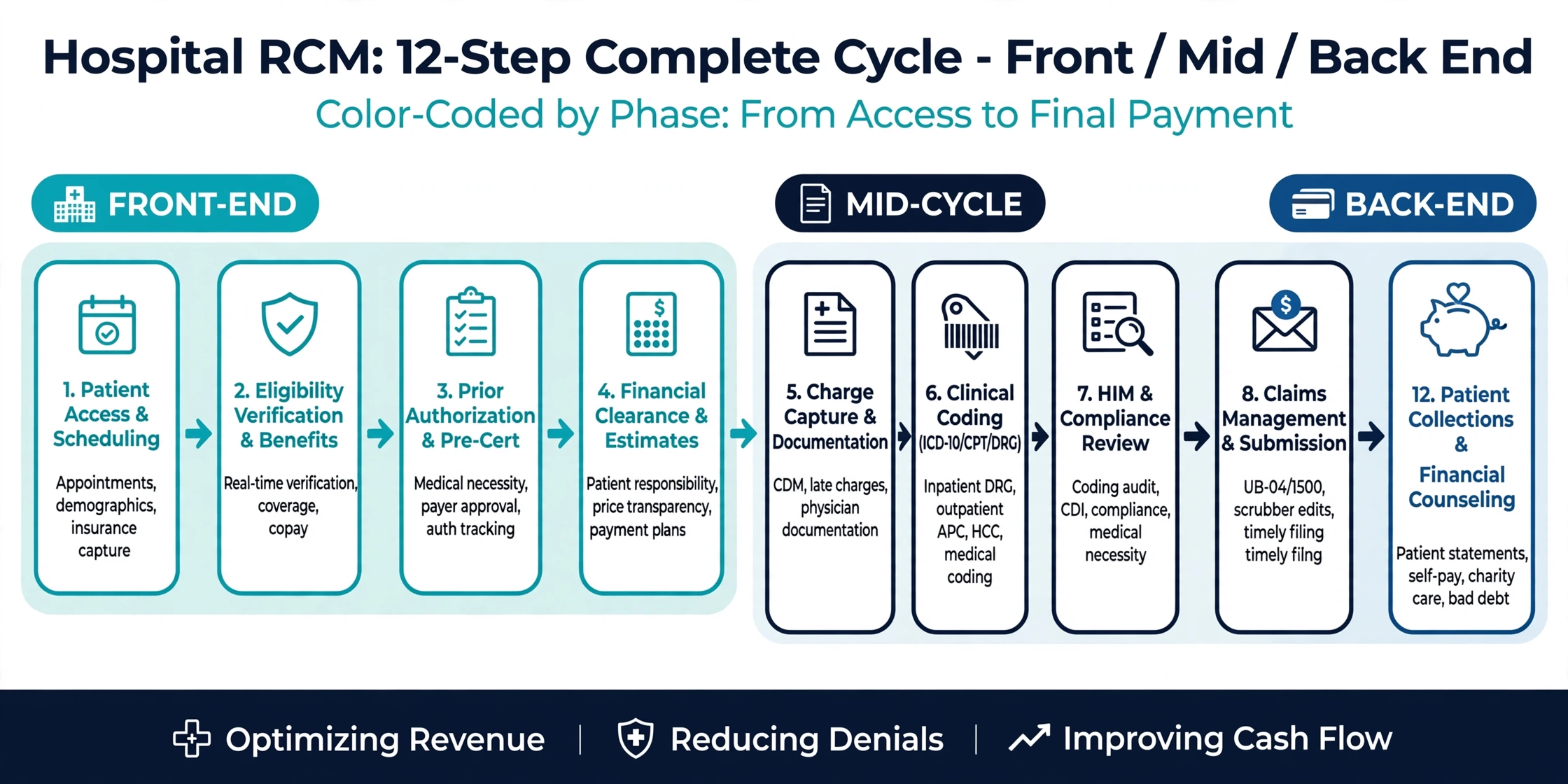
We help you verify Cigna patient financial responsibility by confirming deductibles, copays, coinsurance, out-of-pocket balances, and benefit limitations before services are provided. You can use these verified details to communicate expected costs clearly, collect accurately, and reduce billing disputes after claim processing.
| Cost-Sharing Element | What to Verify | Example Scenario | Why Providers Need It |
|---|---|---|---|
| Deductible | Individual vs. family, amount met | Patient met $300 of $1,000 deductible | Determines what's collected at visit |
| Copay | Amount by service type | $30 PCP copay vs. $60 specialist copay | Prevents under- or over-collection |
| Coinsurance | Percentage owed after deductible | 20% coinsurance on outpatient procedures | Needed for accurate patient estimates |
| Out-of-pocket max | Remaining balance for the year | Patient has $250 left before max is reached | Impacts how much patient truly owes |
Cigna offers both Medicare Advantage plans and Medicare Supplement (Medigap) plans, and confusing the two during verification is a common and costly mistake. Medicare Advantage plans replace Original Medicare and carry their own network, referral, and authorization rules, while Medicare Supplement plans work alongside Original Medicare to cover cost-sharing gaps.
For Medicare Supplement verification, Cigna’s provider portal allows staff to confirm plan type and pull the patient’s digital ID card directly, which helps avoid the common error of treating a Supplement plan like a standalone Medicare Advantage product. Because CMS requires Medicare Advantage eligibility to be verified with the specific plan rather than through Original Medicare’s HETS system, always confirm Cigna Medicare Advantage eligibility directly through CignaforHCP.com or a phone verification, not through Original Medicare channels.
Eligibility and authorization are separate checks, and even a fully active Cigna plan won’t guarantee payment if a required prior authorization is missing. Imaging, certain surgeries, DME, and specialty medications are common categories where this trips practices up.
Identify which scheduled services are likely to require authorization, confirm who is responsible for submitting it, and check the approved units, visits, or date range once it’s granted. Behavioral health and physical therapy series often require reauthorization at set visit intervals, so this isn’t always a one-time check.
When a patient carries more than one insurance plan, confirming whether Cigna is primary or secondary changes the entire billing order. Getting this wrong is a frequent and avoidable cause of delayed reimbursement.
Outdated COB records are especially common among patients who’ve recently changed jobs, added a spouse’s plan, or become Medicare-eligible. Confirm COB details directly with Cigna rather than relying only on what the patient reports, since patients don’t always know about recent changes to their own coverage order.
Eligibility should be checked at scheduling, reconfirmed closer to the appointment, and verified again on the date of service for high-cost or recurring procedures.
Reverification matters most after any reported insurance change, at the start of a new calendar or benefit year, and before recurring treatment plans like physical therapy or behavioral health series, since deductibles and remaining visit counts reset or deplete on their own schedule.
Most Cigna denials trace back to something preventable at the front desk: inactive coverage, a missing authorization, an out-of-network provider, an exhausted benefit maximum, or incorrect COB. Catching these before the claim is submitted is far less costly than fighting them through an appeal.
A consistent, documented verification process also strengthens your position if a denial is disputed. Having the verification date, method, and reference number on file makes the appeal process faster and more likely to succeed.
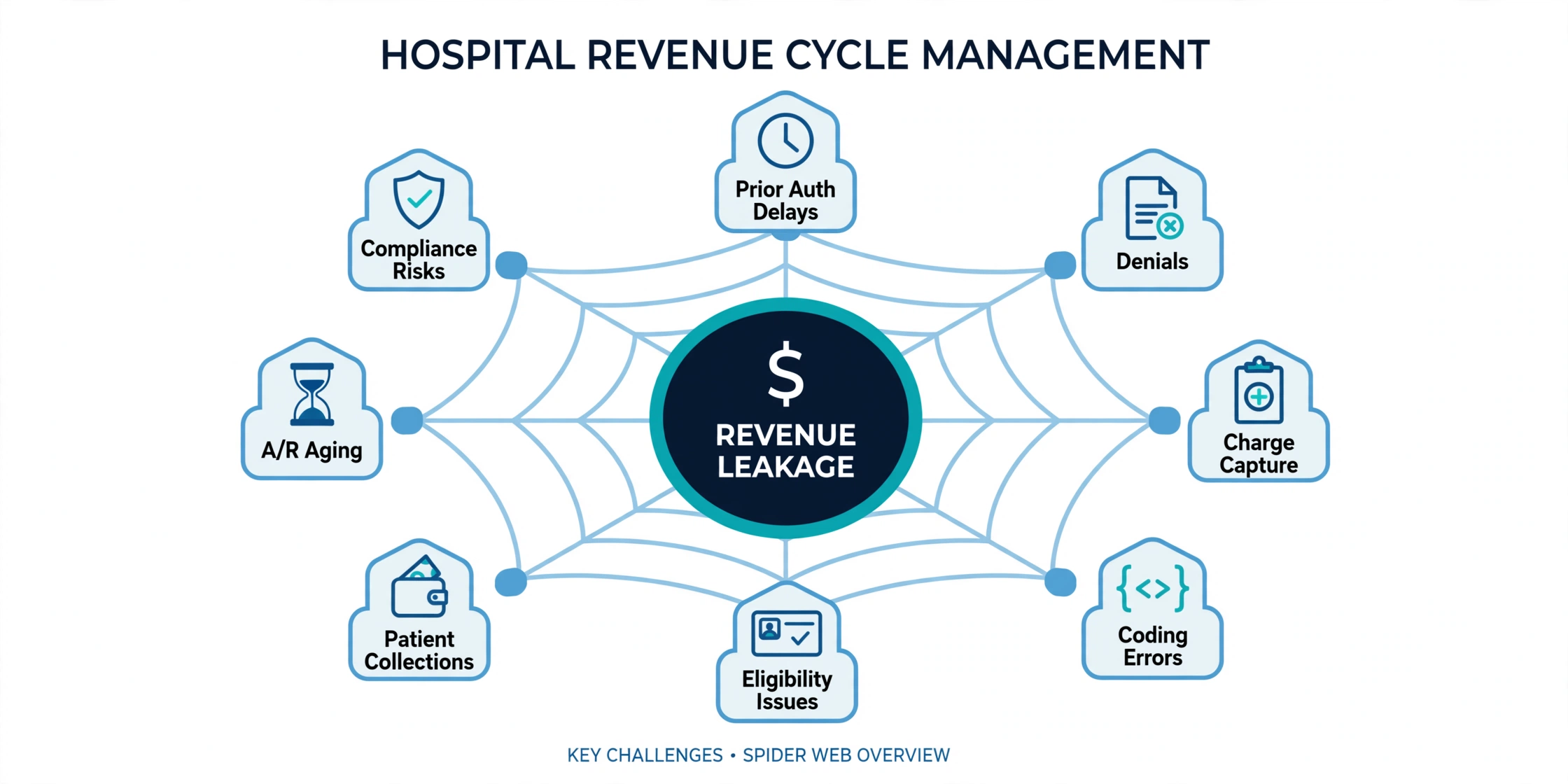
We compare in-house and outsourced Cigna eligibility verification so you can evaluate the differences in staffing, workflow efficiency, verification accuracy, and administrative workload. With the right approach, you can confirm coverage and benefits before service, reduce eligibility-related denials, and keep your front-office operations running efficiently.
| Area | In-House Team | Outsourced Team | Provider Consideration |
|---|---|---|---|
| Staffing | Requires dedicated front-desk hires | Scales with patient volume automatically | Reduces hiring and turnover pressure |
| Payer expertise | Learned over time, inconsistent | Specialists trained across MA, Supplement, commercial | Fewer payer-specific errors |
| Coverage during absences | Gaps during staff leave | Continuous coverage | No backlog buildup |
| Documentation consistency | Varies by staff member | Standardized process across all checks | Stronger appeal support |
| Cost | Salary, benefits, training overhead | Predictable service-based cost | Easier to budget |
House of Outsourcing handles end-to-end Cigna eligibility and benefits verification, from confirming active coverage and identifying the exact plan to checking network status, deductibles, copays, and remaining benefit limits before the patient arrives. Our team stays current on Cigna’s own system updates, including the 2026 CAQH CORE enhancements to the 270/271 transaction, so verification reflects the most accurate data available.
We also confirm prior authorization and referral requirements upfront, check coordination of benefits, and document every verification with the reference numbers your billing team needs. That means fewer front-end surprises, cleaner claims, and less staff time spent untangling avoidable denials.
The fastest way is through the CignaforHCP.com portal, which offers real-time coverage, benefit, and network data around the clock. Phone verification is useful for complex or unclear cases.
At minimum, check at scheduling and again closer to the date of service. High-cost procedures and recurring treatment plans should be reverified before each visit.
No, active status only confirms the plan is in effect — it doesn’t confirm the specific service is covered, that authorization was obtained, that a benefit maximum hasn’t been reached, or that the provider is in-network.
These details are returned in the eligibility and benefits response, whether pulled through the CignaforHCP.com portal, a 270/271 transaction, or a phone call to Cigna.
In April 2026, Cigna enhanced its 270/271 transaction to support all 181 CAQH CORE-required Service Type Codes and to display remaining visits, services, or units when a benefit maximum applies.
Yes, plans change, benefit years reset, and prior authorizations expire — returning patients need reverification just as much as new ones.
Yes, and many practices do exactly that to reduce front-end errors, free up staff time, and get consistent, well-documented verification across every patient.
Get a free assessment from our billing experts