
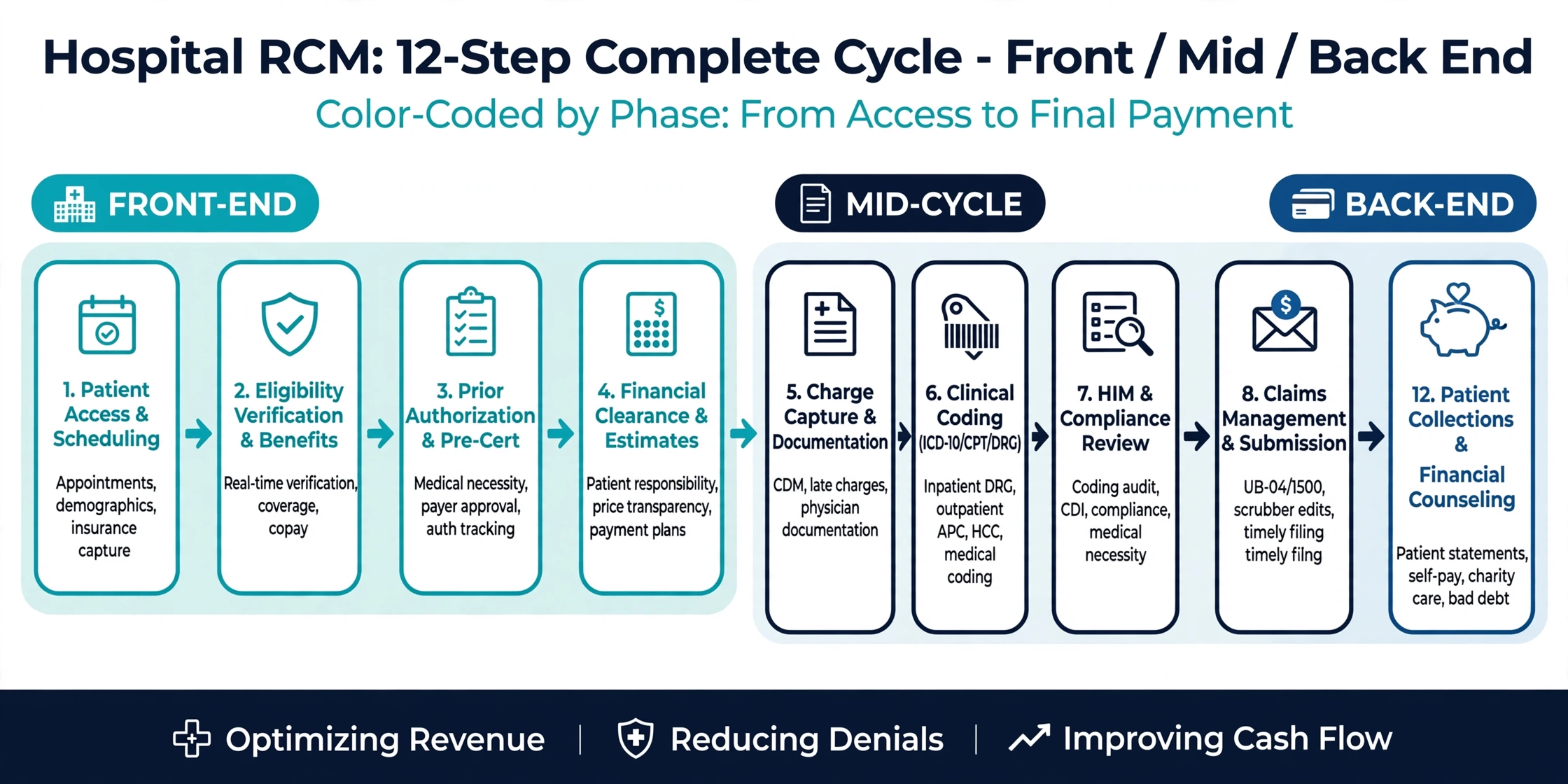
Our Hospital RCM services help healthcare organizations optimize revenue through accurate coding, claims management, compliance support, and denial prevention. We streamline complex hospital billing workflows to improve reimbursements, reduce revenue leakage, and support long-term financial performance.
Verifying Aetna eligibility before every visit is one of the simplest ways to protect your practice from denials that could have been caught at the front desk. Aetna, now part of the CVS Health family, runs commercial, Medicare Advantage, and Medicaid products under one umbrella — and each carries its own verification quirks your team needs to know.
This guide walks through exactly what to check, how to check it, and where Aetna’s rules differ enough from other payers to catch an unprepared front-desk team off guard.
Eligibility verification confirms that a patient’s Aetna plan is active and applicable for the specific date they’re being seen. It’s the first checkpoint in the revenue cycle, and getting it wrong at this stage tends to cascade into billing rework later.
An active Aetna ID card doesn’t automatically mean the visit will be paid for. The provider could be out of network for that specific plan, the service could require prior authorization, or a benefit limit could already be exhausted.
Eligibility vs. benefits verification: Eligibility confirms the plan is active. Benefits verification tells you what that plan actually pays for — deductibles, copays, coinsurance, and any plan-specific limitations.
Eligibility vs. prior authorization: These are two separate checks. Confirming eligibility never confirms that Aetna has pre-approved a specific service, and treating the two as interchangeable is a common source of denials.
Aetna’s electronic eligibility responses typically return active coverage status, effective and termination dates, deductible amounts, copays, coinsurance, plan limitations, and coordination-of-benefits information — a genuinely useful data set when your team actually reads all of it, not just the active/inactive flag.
Skipping or rushing this check is one of the most common causes of avoidable denials, and those denials almost always resurface later as appeals, resubmissions, or write-offs.
Confirming coverage before the visit also gives your team the chance to tell the patient what they’ll owe upfront. That single step prevents the surprise-bill conversation that damages trust and slows down collections.
It protects cash flow too — fewer denials and less billing rework keep your reimbursement timeline predictable instead of stuck in appeal queues.
Accurate front-end data collection is what makes an Aetna eligibility check reliable. A mistyped member ID or an outdated card image is often enough to return an inaccurate or failed result.
Collect the patient’s full legal name, date of birth, and current address, along with their Aetna member ID and group number exactly as printed on the card. Aetna Medicare Advantage plan members now carry 12-digit member IDs beginning with “10” instead of the older “ME” prefix, so staff should be watching for that format specifically.
You’ll also need subscriber information if the patient isn’t the primary policyholder, their relationship to the subscriber, and details on any secondary coverage. Finally, confirm the planned date and type of service, since responses can vary based on both.
A standard Aetna eligibility response can confirm active or inactive coverage, effective and termination dates, and the specific plan or product type the patient is enrolled in. It should also indicate whether your provider or facility is in-network for that particular plan.
Beyond basic status, your team needs deductible amounts and how much remains, copay, coinsurance, and the patient’s out-of-pocket maximum. Benefit limitations, exclusions, and frequency caps are often buried in the detailed response and get missed when staff only check the top-line status.
Referral and prior authorization requirements should be confirmed for the specific service being scheduled. Coordination-of-benefits data will tell you whether Aetna is primary or secondary, which changes how the claim needs to be billed.
As Aetna itself notes, electronic eligibility responses can include active coverage, effective and termination dates, deductibles, copays, coinsurance, plan limits, and coordination-of-benefits information — all of which should be pulled and reviewed, not just the coverage status line.
Our complete Aetna eligibility verification checklist helps you confirm active coverage, plan benefits, patient responsibility, service limitations, and authorization requirements before care is provided. We help you verify these details upfront so you can reduce eligibility errors, prevent avoidable denials, and maintain a smoother billing workflow.
| Verification Item | What to Check | Why It Matters | Action Required |
|---|---|---|---|
| Coverage status | Active/inactive on date of service | Inactive coverage means automatic denial | Confirm before scheduling is finalized |
| Effective/termination dates | Plan start and end dates | Coverage gaps cause missed claims | Cross-check against DOS |
| Plan/product type | Commercial, Medicare Advantage, Medicaid | Determines network and referral rules | Identify the exact plan name |
| Network status | In-network vs. out-of-network | Affects reimbursement and patient cost | Verify both provider and facility |
| Deductible | Amount and remaining balance | Impacts patient responsibility | Confirm individual vs. family |
| Copay/coinsurance | Service-specific amount | Needed for accurate collection | Match to service type |
| Out-of-pocket max | Remaining balance | Changes patient billing amount | Check accumulator status |
| Authorization requirement | Is prior auth needed for this service | Missing auth is a top denial cause | Confirm before scheduling |
| COB status | Primary vs. secondary payer | Determines billing order | Confirm with patient and payer |
Collect accurate patient information. Confirm name, date of birth, member ID, and group number directly from the insurance card.
Validate member identification. Watch for the newer 12-digit Aetna Medicare Advantage IDs starting with “10,” which have replaced the older “ME”-prefixed format.
Confirm coverage for the date of service. A plan can be active today but not on the actual appointment date, so always check against the scheduled DOS.
Identify the exact plan. Aetna offers commercial, Medicare Advantage, and Medicaid products (branded as Aetna Better Health in many states) — confirm which one applies.
Confirm provider network participation. Check both the rendering provider and the facility, since network status can differ between the two even under the same plan.
Verify service-specific benefits. General eligibility doesn’t guarantee coverage for the specific CPT code or service you’re billing.
Review patient cost-sharing. Pull the deductible remaining, copay, and coinsurance so your team can collect accurately at check-in.
Check authorization/referral requirements. Confirm whether the service needs prior approval before it’s performed.
Verify COB information. Confirm whether Aetna is primary or secondary if the patient has more than one insurance plan.
Document the verification result. Record the date, method, and reference number — this becomes your defense if a denial is disputed later.
A 270 transaction is the electronic eligibility inquiry sent to Aetna through your practice-management system or clearinghouse. Aetna returns a 271 transaction, the structured response containing coverage, benefit, and cost-sharing data.
Aetna’s provider eligibility and benefits tools are accessed primarily through the Availity Provider Portal, which functions as a multipayer hub — the same login used for other participating payers works for Aetna as well. Availity supports real-time eligibility checks, and Aetna allows benefit inquiries covering a wide look-back and look-ahead window, generally up to 27 months from the current date.
Electronic responses are fast and generally reliable, but complex Medicare Advantage benefit structures, behavioral health carve-in changes, or unusual coordination-of-benefits situations may still call for a follow-up phone call or the interactive voice response (IVR) system for full clarity.
Aetna eligibility can be verified through different methods, depending on the type of coverage and benefit information you need to confirm. You can compare the available verification methods in the table below to understand their differences and choose the most practical approach for your workflow.
| Verification Method | Best Use | Information Available | Advantages | Potential Limitations |
|---|---|---|---|---|
| Availity portal | Daily standard checks | Coverage, benefits, network, COB | Real-time, multipayer, 24/7 access | Requires portal access setup |
| 270/271 transaction | High-volume, automated checks | Structured eligibility and benefit data | Fast, integrates with PM/EHR | May miss plan-specific nuances |
| Phone/IVR verification | Complex or unclear cases | Full benefit breakdown | Human clarification available | Longer turnaround, hold times |
| Aetna Better Health portals | State Medicaid plan verification | Coverage, enrollment, benefit details | State-specific tools available | Varies by state, separate logins |
| Manual payer representative | Disputes or conflicting data | Direct confirmation from Aetna | Most reliable for edge cases | Slowest method |
This is where most eligibility mistakes happen. An Aetna plan can show “active” and still deny the claim because the specific service falls under an exclusion, a frequency limit, or a medical necessity policy.
Behavioral health services are a good example — Aetna Behavioral Health now administers most commercial behavioral health benefits directly rather than through a separate carve-out, so practices still routing verification or claims through an old third-party behavioral health portal are working with outdated information. Physical therapy, diagnostic imaging, and certain specialist visits are other common areas where Aetna applies visit caps or documentation requirements that basic eligibility won’t reveal.
Always treat eligibility as step one. Service-specific benefit verification is what actually protects the claim from a denial down the line.
Aetna eligibility issues can occur due to inactive coverage, outdated member information, plan limitations, or incorrect benefit details. We help you identify and resolve these problems before services are provided, helping you reduce eligibility-related denials and maintain a smoother reimbursement process.
| Eligibility Problem | What It Means | Claim/Revenue Risk | Recommended Solution |
|---|---|---|---|
| Inactive coverage | Plan terminated or not yet effective | Full claim denial | Verify before scheduling and at check-in |
| Incorrect member ID | Data entry or outdated card format | Eligibility check fails or returns wrong plan | Watch for newer 12-digit MA IDs starting with "10" |
| Wrong plan identified | Confused with another Aetna product | Wrong benefits applied, incorrect billing | Confirm exact plan name in the 271 response |
| Provider out of network | Provider/facility not contracted for that plan | Higher patient cost or denial | Check network status per specific plan |
| Incorrect COB | Wrong primary/secondary order | Payer rejects claim, delayed payment | Confirm COB directly with patient and payer |
| Missing authorization | Prior approval not obtained | Automatic denial for the service | Confirm auth requirement before the visit |
| Outdated behavioral health routing | Verifying through an old carve-out portal | Delayed or incorrect verification | Verify directly through Aetna Behavioral Health/Availity |
| Deductible not met | Patient hasn't met annual deductible | Larger-than-expected patient balance | Communicate estimate to patient before visit |
Confirm whether the deductible in question is individual or family, and how much has already been met for the current benefit year before assuming a number from the last visit.
Copays typically vary by service type under a single Aetna plan — a primary care visit, specialist visit, and urgent care visit rarely share the same copay. Coinsurance percentages should be pulled directly from the current eligibility response rather than carried over from a prior encounter.
Out-of-pocket accumulators reset annually, so a patient who hit their max in December may be starting fresh in January. A clear, upfront estimate communicated to the patient reduces billing disputes and builds trust in your front-desk process.
We help you verify Aetna patient financial responsibility by confirming deductibles, copays, coinsurance, out-of-pocket balances, and plan-specific cost-sharing details before care is provided. This helps you give patients clearer cost estimates, collect the appropriate amount upfront, and reduce billing disputes later.
| Cost-Sharing Element | What to Verify | Example Scenario | Why Providers Need It |
|---|---|---|---|
| Deductible | Individual vs. family, amount met | Patient met $150 of $750 deductible | Determines what's collected at visit |
| Copay | Amount by service type | $25 PCP copay vs. $50 specialist copay | Prevents under- or over-collection |
| Coinsurance | Percentage owed after deductible | 20% coinsurance on outpatient procedures | Needed for accurate patient estimates |
| Out-of-pocket max | Remaining balance for the year | Patient has $400 left before max is reached | Impacts how much patient truly owes |
Aetna is a major Medicare Advantage carrier, and a meaningful share of your eligibility checks will involve MA plans rather than standard commercial coverage. These plans carry their own ID format, network rules, and prior authorization lists that differ from Original Medicare.
Remember that Aetna Medicare Advantage members now use 12-digit member IDs beginning with “10,” replacing the older “ME”-prefixed format — a detail that trips up front-desk staff who are used to the old card layout. HMO-structured MA plans commonly require a PCP referral before specialist visits are covered, while PPO structures apply network-tiered cost-sharing instead.
Because CMS requires Medicare Advantage eligibility to be verified with the specific plan rather than through Original Medicare’s HETS system, your team should confirm Aetna MA eligibility directly through Availity or Aetna’s dedicated Medicare Advantage provider tools — not assume Original Medicare rules apply.
Eligibility and authorization are separate checks, and even a fully active Aetna plan won’t guarantee payment if a required prior authorization is missing. Imaging, certain surgeries, DME, and specialty medications are common examples where this trips practices up.
Identify which scheduled services are likely to require authorization, confirm who is responsible for submitting it, and check the approved units, visits, or date range once it’s granted. Behavioral health and physical therapy series often require reauthorization at set visit intervals, so this isn’t always a one-time check.
Aetna HMO plans, including many Medicare Advantage HMO products, commonly require a PCP referral before a specialist visit is covered. PPO plans are generally more flexible but may still apply higher out-of-network cost-sharing without one.
Confirm that the referral is valid for the specific rendering provider, hasn’t expired, and covers the number of visits being scheduled. A referral tied to the wrong specialist or an expired date range is a common and entirely preventable denial reason.
When a patient carries more than one insurance plan, confirming whether Aetna is primary or secondary changes the entire billing order. Getting this wrong is a frequent and avoidable cause of delayed reimbursement.
Outdated COB records are especially common among Medicare-eligible patients who may also carry employer coverage, a Medigap policy, or Medicaid as secondary. Confirm COB details directly with Aetna rather than relying only on what the patient reports, since patients don’t always know about recent changes to their own coverage order.
Eligibility should be checked at scheduling, reconfirmed closer to the appointment, and verified again on the date of service for high-cost or recurring procedures.
Reverification matters most after any reported insurance change, at the start of a new calendar or benefit year, and before recurring treatment plans like physical therapy or behavioral health series, since deductibles and authorization windows reset or expire on their own schedule.
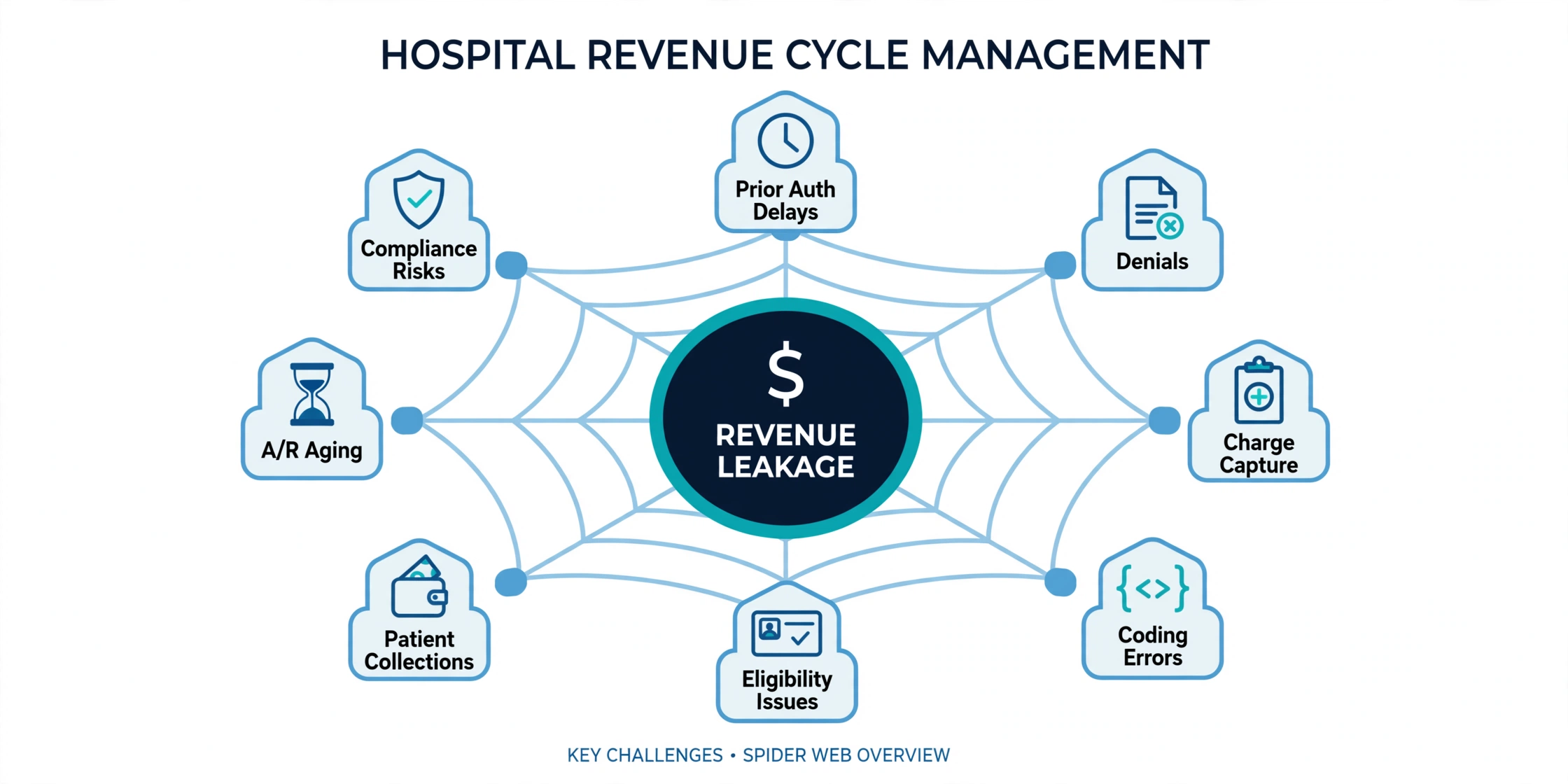
Most Aetna denials trace back to something preventable at the front desk: inactive coverage, a missing authorization, an out-of-network provider, or incorrect COB. Catching these before the claim is submitted is far less costly than fighting them through an appeal.
A consistent, documented verification process also strengthens your position if a denial is disputed. Having the verification date, method, and reference number on file makes the appeal process faster and more likely to succeed.
Handling Aetna eligibility verification in-house can give you direct control, but it also adds coverage checks, benefit verification, and follow-up tasks to your team’s workload. We provide outsourced verification support to help you save time, improve accuracy, and reduce eligibility-related issues before claims are submitted.
| Area | In-House Team | Outsourced Team | Provider Consideration |
|---|---|---|---|
| Staffing | Requires dedicated front-desk hires | Scales with patient volume automatically | Reduces hiring and turnover pressure |
| Payer expertise | Learned over time, inconsistent | Specialists trained across MA, Medicaid, commercial | Fewer payer-specific errors |
| Coverage during absences | Gaps during staff leave | Continuous coverage | No backlog buildup |
| Documentation consistency | Varies by staff member | Standardized process across all checks | Stronger appeal support |
| Cost | Salary, benefits, training overhead | Predictable service-based cost | Easier to budget |
House of Outsourcing handles end-to-end Aetna eligibility and benefits verification, from confirming active coverage and identifying the exact plan to checking network status, deductibles, copays, and coinsurance before the patient arrives. Our team stays current on details like Aetna’s Medicare Advantage ID format changes and the shift of behavioral health administration in-house, so verification doesn’t fall through the cracks on the details that trip up less specialized teams.
We also confirm prior authorization and referral requirements upfront, check coordination of benefits, and document every verification with the reference numbers your billing team needs. That means fewer front-end surprises, cleaner claims, and less staff time spent untangling avoidable denials.
The fastest way is through the Availity Provider Portal, which returns real-time coverage, benefit, and network data. Phone or IVR verification is useful for complex or unclear cases.
At minimum, check at scheduling and again closer to the date of service. High-cost procedures and recurring treatment plans should be reverified before each visit.
No, active status only confirms the plan is in effect — it doesn’t confirm the specific service is covered, that authorization was obtained, or that the provider is in-network.
These details are returned in the eligibility and benefits response, whether pulled through Availity, a 270/271 transaction, or a phone call to Aetna.
Aetna Medicare Advantage plan members now carry 12-digit member IDs beginning with “10,” replacing the older “ME”-prefixed format — make sure your team recognizes both when cross-checking older records.
Yes, plans change, benefit years reset, and prior authorizations expire — returning patients need reverification just as much as new ones.
Yes, and many practices do exactly that to reduce front-end errors, free up staff time, and get consistent, well-documented verification across every patient.
Get a free assessment from our billing experts