
Our expert endocrinology medical billing services help practices improve reimbursements, reduce claim delays, and manage complex coding requirements with accuracy. We handle every step of the billing process, from coding and claims submission to denial management and revenue optimization.
Here’s a reality that most endocrinologists in the USA quietly accept but rarely talk about openly, managing a financially healthy endocrinology practice is almost as complex as managing a patient with diabetes, thyroid disease, and adrenal insufficiency, all at the same time.
As an experienced endocrinologist you know that endocrinology medical billing sits at one of the most demanding intersections in US healthcare. You’re treating chronic, multi-system conditions that require combinations of lab work, imaging, glucose monitoring technology, hormone therapies, long-term care coordination, and continuous follow-up. Every single one of those clinical touchpoints must be precisely translated into the correct CPT code, supported by the right ICD-10 diagnosis, by your in-house medical billing team to get maximum reimbursement for your services.
According to the Centers for Disease Control and Prevention (CDC), more than 38 million Americans have diabetes, the primary condition driving the majority of endocrinology visits in the US. Add in thyroid disorders (which affect approximately 20 million Americans per the American Thyroid Association), osteoporosis, adrenal disorders, pituitary conditions, and metabolic syndrome, and the patient volume in endocrinology is enormous.
That volume deserves a revenue cycle that works as hard as your clinical team does. Our billing experts have written this guide that covers everything, from CPT and ICD-10 codes to chronic care management billing, CGM reimbursement, Medicare rules, documentation requirements, and the compliance risks that most endocrinology practices don’t realize they’re carrying, let’s get into it.
Endocrinology medical billing is the complete process of coding, submitting, and collecting payment for the clinical services that as an endocrinologists you have provided, from office visits and lab interpretations to thyroid ultrasounds, continuous glucose monitor (CGM) setups, hormone injections, bone density scans, and the full suite of chronic care coordination services.
What separates your practice endocrinology medical billing from most other specialties in your area is the chronic, longitudinal nature of the patient relationships. According to our experience, endocrinology patients don’t come in once, get treated, and move on. But actually in reality they come back every 3 months, every 6 months, every year, for the same conditions, with evolving complexity. We have 3 decades of billing experience and according to our experience endocrinology billing spans three major categories of services:
Before we go code by code, let’s talk about why endocrinology medical billing across the USA is genuinely difficult, not as a complaint, but as a practical reality that shapes how practices need to approach their revenue cycles, and the five core complexity drivers in billing are given below.
As an endocrinologist you know that the average endocrinology patient doesn’t have one condition. They have diabetes AND hypertension AND dyslipidemia AND hypothyroidism. Billing for a multi-condition encounter requires carefully selecting the primary diagnosis, correctly sequencing secondary diagnoses, and ensuring each service billed has its own documented medical necessity.
Endocrinology is one of the most lab-intensive specialties in medicine. Each lab test has its own CPT code. Labs ordered in-house vs. sent to a reference laboratory have different billing implications. And Medicare has specific coverage criteria for how frequently certain labs (like HbA1c) can be reimbursed.
CGM devices, insulin pumps, remote monitoring platforms, and endocrinology is increasingly technology-forward. But the billing for technology-driven services (HCPCS codes for devices, setup codes, training codes, monitoring codes) is layered and unfamiliar to most general billing teams.
Endocrinology practices are among the most eligible for Chronic Care Management (CCM) billing in all of healthcare, because their patients almost universally have two or more chronic conditions. Yet study after study shows that the vast majority of eligible practices don’t bill for CCM at all, leaving thousands of dollars in legitimate reimbursement uncollected every month.
Commercial payers and Medicare Advantage plans have expanded PA requirements for CGM devices, DEXA scans, thyroid imaging, and certain laboratory panels. A practice without a systematic PA management workflow loses revenue every time a service is performed without pre-approval.
According to rules and regulation you know that every endocrinology encounter starts with an evaluation and management code. Since the 2021 AMA E/M revisions, now fully adopted, E/M selection for office visits is driven by either Medical Decision Making (MDM) or total time. This actually benefits endocrinology practices significantly because complex chronic disease management supports higher-level MDM almost by definition.
| CPT Code | Patient Type | MDM Level | Typical Time |
|---|---|---|---|
| 99202 | New patient | Straightforward | 15–29 min |
| 99203 | New patient | Low complexity | 30–44 min |
| 99204 | New patient | Moderate complexity | 45–59 min |
| 99205 | New patient | High complexity | 60–74 min |
| 99211 | Established patient | Minimal (staff visit) | N/A |
| 99212 | Established patient | Straightforward | 10–19 min |
| 99213 | Established patient | Low complexity | 20–29 min |
| 99214 | Established patient | Moderate complexity | 30–39 min |
| 99215 | Established patient | High complexity | 40–54 min |
Why Most Endocrinology Visits Are 99214 or 99215: Under the current MDM framework, “moderate complexity” requires at least one of: a new problem with additional workup planned, chronic illness with exacerbation or progression, or prescription drug management. A Type 2 diabetes patient with an elevated HbA1c requiring medication adjustment? That’s 99214 every single time if the documentation supports it.
💡 Tip #1: Stop Defaulting to 99213 for Your Established Diabetic Patients. This is the single most common undercoding pattern in endocrinology medical billing services. A long-term Type 2 diabetes patient with medication management, lab review, and complication monitoring almost always supports 99214 under the MDM framework. If your endocrinologists are documenting their clinical reasoning, the lab trends, the medication change rationale, the complication screening, the documentation already supports the higher level. The billing just needs to capture it.
| CPT Code | Description |
|---|---|
| 99221–99223 | Initial hospital inpatient care (Levels 1–3) |
| 99231–99233 | Subsequent hospital inpatient care |
| 99238–99239 | Hospital discharge day management |
| 99251–99255 | Inpatient consultation (where payer allows) |
You know that labs are the lifeblood of endocrinology medical billing. The challenge isn’t knowing the codes, it’s understanding when you can bill for them directly (in-office lab), when the reference lab bills instead, and when Medicare has specific frequency limitations.
| CPT Code | Test | Clinical Application |
|---|---|---|
| 84443 | Thyroid Stimulating Hormone (TSH) | Primary thyroid screening and monitoring |
| 84436 | Thyroxine (T4), total | Thyroid function assessment |
| 84439 | Thyroxine (T4), free | Hypothyroid/hyperthyroid monitoring |
| 84480 | Triiodothyronine (T3), total | Hyperthyroidism evaluation |
| 84481 | Triiodothyronine (T3), free | T3 toxicosis assessment |
| 83036 | Hemoglobin A1c (HbA1c) | Diabetes management — glycemic control |
| 82947 | Glucose, quantitative | Diabetes monitoring, hypoglycemia workup |
| 82950 | Glucose post-glucose dose | OGTT component |
| 82951 | Glucose tolerance test (GTT), 3 specimens | Gestational diabetes, insulin resistance |
| 83525 | Insulin, total | Insulin resistance, beta-cell function |
| 83527 | Insulin, free | Factitious hypoglycemia evaluation |
| 82306 | Vitamin D (25-OH) | Osteoporosis, malabsorption, deficiency |
| 83970 | Parathyroid hormone (PTH) | Hyperparathyroidism, calcium disorders |
| 82310 | Calcium, total serum | Hypercalcemia/hypocalcemia workup |
| 82374 | Carbon dioxide (CO2) | Metabolic acidosis in DKA |
| 82728 | Ferritin | Iron metabolism, hemochromatosis screen |
| 84022 | Cortisol, free | Adrenal insufficiency/Cushing's evaluation |
| 82533 | Cortisol, total | Adrenal function assessment |
| 84270 | Sex hormone binding globulin | Androgen excess, PCOS evaluation |
| 84402 | Testosterone, free | Hypogonadism workup |
| 84403 | Testosterone, total | Male hypogonadism, PCOS |
| 83519 | Immunoassay — analyte quantitative (ACTH) | Cushing's/Addison's disease |
| 83001 | Follicle-stimulating hormone (FSH) | Reproductive endocrinology |
| 83002 | Luteinizing hormone (LH) | Reproductive endocrinology |
| 82088 | Aldosterone | Primary hyperaldosteronism |
| 82383 | Catecholamines, blood | Pheochromocytoma screening |
| 84585 | Urine catecholamines | Pheochromocytoma/paraganglioma workup |
| 86200 | Anti-CCP antibody | Autoimmune thyroid disease |
| 86376 | Microsomal antibody (anti-TPO) | Hashimoto's thyroiditis |
| 86800 | Thyroglobulin antibody | Thyroid cancer monitoring |
📣 Callout: In-Office Labs vs. Reference Lab Billing — Know the Difference When your endocrinology practice draws blood and sends specimens to a reference laboratory (like Quest or LabCorp), the reference lab bills for the testing, not your practice. Your practice can bill for the venipuncture (CPT 36415) and specimen handling only. If you’re trying to bill both the specimen collection and the lab analysis for a reference-lab test, you’re likely billing for services you didn’t perform, which is a compliance violation. In-house labs (CLIA-certified) allow full lab code billing. So it is important for your medical practice that you must know your lab model, and bill accordingly.
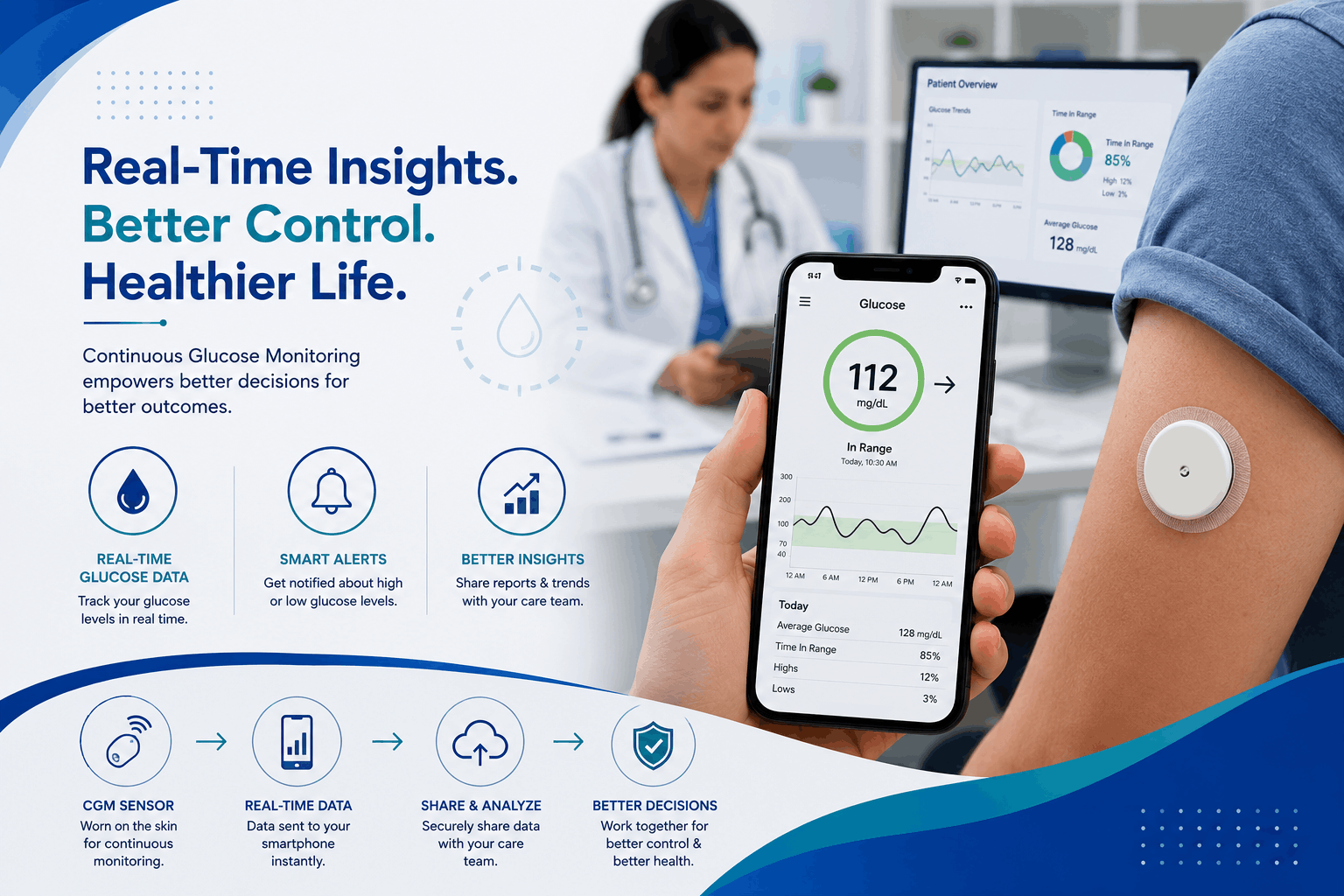
You know as an experienced endocrinologist that diabetes management is the cornerstone of most endocrinology practices in the USA, and it’s also where the most billing revenue is concentrated and where the most errors occur. Let’s break it down systematically.
| Code | Type | Description |
|---|---|---|
| 95250 | CPT | Ambulatory CGM — setup, sensor placement, and patient training |
| 95251 | CPT | CGM — physician review and interpretation of data |
| A9276 | HCPCS | CGM sensor, per day (for personal CGM devices) |
| A9277 | HCPCS | CGM transmitter |
| A9278 | HCPCS | CGM receiver/monitor |
| K0553 | HCPCS | CGM supply allowance — therapeutic CGM (integrated with insulin pump) |
| K0554 | HCPCS | CGM receiver device — therapeutic CGM |
💡 Tip #2: CGM Prior Authorization Is Non-Negotiable — Build the Workflow Before Ordering. Almost every commercial payer and Medicare Advantage plan requires prior authorization for CGM devices. The PA must be submitted before the device is dispensed. Failure to obtain PA means either the claim gets denied outright or the patient is billed, neither outcome is good for patient experience or revenue. Build a same-day PA initiation process triggered at the moment the CGM order is placed in your EHR. Don’t let CGM revenue slip through an administrative gap.
| HCPCS Code | Description |
|---|---|
| E0784 | External ambulatory infusion pump, insulin |
| A4221 | Supplies for maintenance of insulin pump (per month) |
| A4225 | Supplies for external insulin pump, non-disposable type |
| A4230 | Infusion set for external insulin pump, Luer lock |
| A4231 | Infusion set for external insulin pump, syringe type |
| CPT Code | Description | Notes |
|---|---|---|
| G0108 | DSMT — individual session, per 30 minutes | Physician-ordered; accredited program required |
| G0109 | DSMT — group session (2+ patients), per 30 minutes | Lower rate than individual |
According to our billing team, DSMT is a highly underutilized billing opportunity in endocrinology. Medicare covers up to 10 hours of initial DSMT training and 2 hours annually for follow-up. The program must be accredited by the American Diabetes Association (ADA) or American Association of Diabetes Care and Education Specialists (ADCES).
Thyroid conditions including hypothyroidism, hyperthyroidism, Hashimoto’s thyroiditis, Graves’ disease, thyroid nodules, and thyroid cancer generate a significant portion of the clinical and billing activity in most endocrinology practices.
| CPT Code | Description | Notes |
|---|---|---|
| 76536 | Ultrasound, soft tissue of neck (thyroid/parathyroid) | Most common thyroid imaging code |
| 76700 | Ultrasound, abdominal — complete | For abdominal endocrine structures |
| 78012 | Thyroid uptake (single/multiple determinations) | Nuclear medicine — thyroid function |
| 78013 | Thyroid imaging with uptake | Combined imaging and function study |
| 78014 | Thyroid imaging with uptake, multiple studies | Extended nuclear imaging |
| 78015 | Thyroid imaging, with vascular flow | Graves' disease evaluation |
| 78018 | Whole body thyroid imaging | Post-thyroidectomy cancer surveillance |
| 78070 | Parathyroid imaging | Hyperparathyroidism evaluation |
| 78072 | Parathyroid imaging with correlative CT | SPECT/CT for parathyroid localization |
| CPT Code | Description | Notes |
|---|---|---|
| 10021 | FNA biopsy — without imaging guidance | Direct palpation approach |
| 10005 | FNA biopsy — with ultrasound guidance, first lesion | Ultrasound-guided; most common |
| 10006 | FNA biopsy — with ultrasound guidance, each additional lesion | Add-on for multiple nodules |
| 10009 | FNA biopsy — with CT guidance, first lesion | CT-guided approach |
| 88172 | Cytopathology evaluation — immediate assessment | Rapid on-site evaluation (ROSE) |
| 88173 | Cytopathology, smears — interpretation | Final pathology interpretation |
💡 Tip #3: Always Bill the Ultrasound Guidance Separately When You Use It. A common undercoding error in thyroid FNA billing is performing an ultrasound-guided biopsy but only billing 10021 (without guidance). If ultrasound was used to guide the needle, which is best practice and should be documented in every thyroid FNA report, bill 10005 (or 10006 for additional nodules). That’s both more accurate and better-reimbursed. The ultrasound guidance must be documented in the procedure note with a specific statement that real-time imaging guidance was used.
Osteoporosis management is a significant revenue stream for many endocrinology practices, particularly those serving older female patients and patients on long-term glucocorticoid therapy.
| CPT Code | Description | Notes |
|---|---|---|
| 77080 | DXA — axial skeleton (hip and spine) | Standard osteoporosis screening |
| 77081 | DXA — appendicular skeleton (forearm, wrist, heel) | Peripheral sites; limited clinical use |
| 77085 | DXA — axial skeleton with vertebral fracture assessment (VFA) | Combined bone density + fracture risk |
| 77086 | Vertebral fracture assessment — standalone | Without full DXA |
Medicare covers DXA bone density studies for:
Beyond diabetes and thyroid, endocrinology medical billing encompasses the full spectrum of hormone disorders adrenal, pituitary, reproductive endocrinology, and metabolic conditions.
| CPT Code | Description | Notes |
|---|---|---|
| 96372 | Therapeutic injection — subcutaneous or intramuscular | Most hormone injections |
| 96401 | Chemotherapy — non-hormonal, subcutaneous/intramuscular | Some cancer-related endocrine drugs |
| 96402 | Hormonal therapy, subcutaneous/intramuscular injection | Leuprolide, other hormonal agents |
| 96365 | Intravenous infusion — initial, up to 1 hour | IV hormone or bisphosphonate |
| 96366 | IV infusion — each additional hour | Add-on to 96365 |
| 96379 | Unlisted therapeutic injection | When no specific code exists |
| HCPCS Code | Drug | Indication |
|---|---|---|
| J1950 | Leuprolide acetate | Prostate cancer, endometriosis, central precocious puberty |
| J3490 | Unclassified drugs | When drug has no specific J-code |
| J0500 | Dicyclomine HCl injection | Supportive use |
| J2270 | Morphine sulfate injection | Pain management in some adrenal crisis |
| J1020 | Methylprednisolone acetate | Adrenal disorders, inflammatory conditions |
| J3301 | Triamcinolone acetonide | Anti-inflammatory endocrine indications |
| J3380 | Testosterone (various formulations) | Hypogonadism treatment |
| J0636 | Calcitriol injection | Hypoparathyroidism, renal disease |
| J0895 | Deferoxamine mesylate | Iron overload in hemochromatosis |
CCM billing is the single largest untapped revenue opportunity sitting inside most endocrinology practices right now. And the reason it’s untapped isn’t that it’s unavailable, it’s that most practices simply don’t have the workflow to capture it.
CCM billing is the single largest untapped revenue opportunity sitting inside most endocrinology practices right now. And the reason it’s untapped isn’t that it’s unavailable, it’s that most practices simply don’t have the workflow to capture it.
| CPT Code | Description | Requirements |
|---|---|---|
| 99490 | CCM — first 20 minutes per calendar month | 2+ chronic conditions; clinical staff time; care plan required |
| 99439 | CCM — each additional 20 minutes per month | Add-on to 99490 |
| 99491 | Complex CCM — physician time, first 30 minutes | Physician or QHP personally performs the work |
| 99437 | Complex CCM — each additional 30 minutes | Add-on to 99491 |
| Requirement | Details |
|---|---|
| Patient eligibility | 2+ chronic conditions lasting ≥12 months |
| Patient consent | Written informed consent required and documented |
| Care plan | Comprehensive care plan created and maintained |
| 24/7 access | Practice must offer 24/7 access to care and urgent needs |
| Care coordination | Documented coordination between providers |
| Time tracking | Minimum 20 minutes of clinical staff time per month |
| EHR requirement | Services must be documented in certified EHR |
| Billing frequency | Billed once per calendar month per patient |
💡 Tip #4: Start With Your Top 100 Diabetic Patients for CCM Enrollment. If you’re new to CCM billing, don’t try to enroll your entire patient panel at once. Identify your 100 most complex diabetic patients, those with diabetes plus at least one of: hypertension, CKD, neuropathy, retinopathy, or thyroid disease. Enroll them first, establish the care coordinator workflow, and measure the revenue impact. A modest enrollment of 100 CCM patients at $62/month = approximately $74,400 in additional annual revenue for care coordination your team is already doing.
| CCM Patients Enrolled | Monthly Revenue | Annual Revenue |
|---|---|---|
| 50 patients | ~$3,100 | ~$37,200 |
| 100 patients | ~$6,200 | ~$74,400 |
| 250 patients | ~$15,500 | ~$186,000 |
| 500 patients | ~$31,000 | ~$372,000 |
You know that remote patient monitoring is a natural fit for endocrinology. Blood glucose data from CGMs, blood pressure readings from connected devices, weight trends from connected scales, all of this data is already flowing from your patients’ devices. RPM billing captures reimbursement for the clinical management of that data.
| CPT Code | Description | Requirements |
|---|---|---|
| 99453 | RPM — initial setup and patient education | One-time per device; initial setup of monitoring |
| 99454 | RPM — device supply with daily recordings | 16+ days of data transmission per 30-day period |
| 99457 | RPM — monitoring and management, first 20 min/month | Physician/QHP interactive communication with patient |
| 99458 | RPM — each additional 20 min/month | Add-on to 99457 |
ICD-10 coding drives medical necessity in endocrinology medical billing. The right diagnosis code connects your clinical services to insurance coverage. The wrong one, or an unspecified one when a specific code is available, invites denial.
| ICD-10 Code | Condition | Billing Notes |
|---|---|---|
| E11.9 | Type 2 diabetes mellitus, without complications | Use more specific codes when complications are documented |
| E11.65 | Type 2 DM with hyperglycemia | Common presentation; more specific than E11.9 |
| E11.40 | Type 2 DM with diabetic neuropathy, unspecified | Specify type when documented |
| E11.311 | Type 2 DM with unspecified diabetic retinopathy with macular edema | Ophthalmology co-management |
| E11.22 | Type 2 DM with diabetic chronic kidney disease, Stage 3 | Code CKD stage separately (N18.3) |
| E10.9 | Type 1 diabetes mellitus, without complications | Drives CGM therapeutic coverage |
| E10.65 | Type 1 DM with hyperglycemia | Frequent acute presentation |
| E03.9 | Hypothyroidism, unspecified | Specify type when known |
| E03.0 | Congenital hypothyroidism with diffuse goiter | Pediatric endocrinology |
| E05.00 | Thyrotoxicosis with diffuse goiter without thyrotoxic crisis | Graves' disease typical presentation |
| E05.10 | Thyrotoxicosis with toxic single thyroid nodule | Toxic adenoma |
| E06.3 | Autoimmune thyroiditis | Hashimoto's disease |
| E04.2 | Nontoxic multinodular goiter | Drives ultrasound and FNA |
| E04.1 | Nontoxic single thyroid nodule | Most common indication for thyroid FNA |
| E07.0 | Hypersecretion of calcitonin | Medullary thyroid cancer evaluation |
| C73 | Malignant neoplasm of thyroid gland | Thyroid cancer — drives whole-body scan |
| E21.0 | Primary hyperparathyroidism | Drives PTH, calcium, DEXA billing |
| E21.3 | Hyperparathyroidism, unspecified | Use when type not specified |
| E27.1 | Primary adrenocortical insufficiency | Addison's disease |
| E27.40 | Corticoadrenal insufficiency, unspecified | Adrenal crisis risk documentation |
| E24.0 | Pituitary-dependent Cushing's disease | Specific Cushing's type |
| E22.0 | Acromegaly and pituitary gigantism | Pituitary adenoma — drives IGF-1 billing |
| E23.0 | Hypopituitarism | Drives hormone panel billing |
| E28.2 | Polycystic ovarian syndrome (PCOS) | Drives testosterone, FSH, LH, glucose billing |
| E66.01 | Morbid (severe) obesity due to excess calories | Metabolic endocrinology |
| E78.5 | Hyperlipidemia, unspecified | Common comorbidity; drives lipid panel billing |
| M81.0 | Age-related osteoporosis without current fracture | Drives DEXA billing |
| M80.00 | Age-related osteoporosis with current pathological fracture | More severe; higher MDM level |
It is clear and you know that modifiers in endocrinology medical billing tell the payer the full clinical story behind your practice medical claim. Missing or misapplied modifiers are one of the top denial triggers.
| Modifier | Name | Correct Application in Endocrinology |
|---|---|---|
| 25 | Separate E/M Service | Significant, separately identifiable E/M on same day as procedure (e.g., office visit + thyroid FNA) |
| 59 | Distinct Procedural Service | Separate procedure not normally reported together — bypasses NCCI bundling |
| XS | Separate Structure | Preferred alternative to -59; procedure performed on different anatomical site |
| 51 | Multiple Procedures | Multiple procedures same visit; reduces secondary procedure reimbursement appropriately |
| 76 | Repeat Procedure | Same procedure repeated same day by same physician |
| GQ | Via Asynchronous Telehealth | For store-and-forward telemedicine |
| GT | Via Interactive Audio/Video | Synchronous video visit telehealth |
| GX | Notice Given | Voluntary ABN for service not covered by Medicare |
| GY | Statutory Exclusion | Service excluded from Medicare benefits |
| 33 | Preventive Service | Waives patient cost-sharing for applicable preventive services |
| KX | Medical Necessity Met | Documents that LCD requirements for a service have been satisfied |
💡 Tip #5: Use Modifier KX for CGM and DEXA Claims When LCD Requirements Are Met. Many Medicare Administrative Contractors (MACs) require modifier KX on claims for CGMs and DEXA scans to indicate that all coverage criteria specified in the Local Coverage Determination have been satisfied. Missing KX when required results in automatic denial. Review your MAC’s LCDs for CGM and bone density imaging and build KX into your claim templates for these services when Medicare is the payer.
Medicare is the dominant payer for endocrinology, both because endocrine conditions are more prevalent in older adults and because diabetes management creates a large Medicare-covered care management billing opportunity.
| Service | Medicare Coverage | Key Requirement |
|---|---|---|
| Office E/M visits | Part B covered | Medical necessity documented |
| HbA1c testing | Covered for diabetics | Every 3 months if poorly controlled; every 6 months if controlled |
| CGM (personal use) | Part B covered for insulin-treated | Prescription, PA, and medical necessity documentation |
| CGM (therapeutic/iCGM) | Part B covered (K0553) | Must be insulin-dependent; integrated pump decision-making |
| DSMT | Part B covered (G0108/G0109) | ADA/ADCES-accredited program; physician order required |
| Medical Nutrition Therapy (MNT) | Part B covered | Diabetes or non-dialysis CKD; physician referral required |
| CCM (99490) | Part B covered | 2+ chronic conditions; consent; care plan; 20 min/month |
| RPM (99453–99458) | Part B covered | Chronic condition; device data transmission; 16+ days/month |
| DXA (77080) | Part B covered | Every 24 months for qualifying diagnoses |
| Thyroid ultrasound (76536) | Part B covered | Medical necessity for thyroid nodule or disorder |
| Thyroid FNA (10005) | Part B covered | Nodule with clinical indication; imaging guidance documented |
| Whole body thyroid scan (78018) | Part B covered | Post-thyroidectomy surveillance; malignancy documentation |
Medicaid coverage for endocrinology services is state-administered and highly variable. Key considerations include:
In endocrinology, documentation isn’t just a billing requirement, it’s the clinical narrative that justifies every lab ordered, every device prescribed, every injection administered, and every hour of care coordination billed. Weak documentation = weak claims = denied revenue.
| MDM Level | Problems Addressed | Data Reviewed | Risk of Complications |
|---|---|---|---|
| Straightforward | 1 self-limited problem | Minimal | Minimal |
| Low complexity | 2+ self-limited or 1 stable chronic | Limited | Low (OTC drugs only) |
| Moderate complexity | 1+ chronic with exacerbation OR new problem with workup | Moderate | Prescription drug management |
| High complexity | 1+ chronic with severe exacerbation OR new problem threatening life | Extensive | Drug therapy with intensive monitoring |
| Documentation Element | Required | Notes |
|---|---|---|
| Reason for procedure | Yes | Clinical indication must support medical necessity |
| Consent documentation | Yes | Informed consent noted in chart |
| Device/equipment used | Yes | Ultrasound guidance, CGM device model |
| Procedure technique | Yes | FNA approach, injection site, CGM placement site |
| Findings | Yes | Aspiration results, nodule characteristics |
| Specimen disposition | For FNA | Cytology sent to pathology — specify lab |
| Patient response | Yes | Tolerance, any adverse events |
| Post-procedure plan | Yes | Next steps, follow-up imaging, lab correlation |
| Physician attestation | Yes | Signed and dated |
Denials in endocrinology are predictable. Understanding the patterns is the first step to eliminating them.
| Denial Reason | Root Cause | Fix |
|---|---|---|
| CGM claim denied — no PA | Prior authorization not obtained before device dispensed | Mandatory PA workflow triggered at time of CGM order |
| HbA1c frequency denial | Test billed more frequently than Medicare allows | Track test frequency per patient per payer; build schedule |
| FNA billed without guidance when performed with US | 10021 used instead of 10005 | Document ultrasound guidance explicitly; update charge capture |
| CCM denied — no care plan on file | Care plan not documented in EHR before billing | CCM cannot be billed without documented care plan |
| RPM denied — insufficient data days | Patient didn't transmit data 16+ days in billing period | Patient education on device use; monitor compliance before billing |
| DEXA frequency denial | DXA billed within 24 months without documentation of exception | Track last DXA date per patient; document exception indication when billing within 24 months |
| E/M undercoded — MDM not documented | Physician note doesn't reflect complexity of actual care | Educate physicians on MDM documentation elements |
| Modifier -25 not supported | E/M and procedure documented as the same service | E/M note must be separately identifiable from procedure note |
| Lab billed for reference lab test | In-house billing of test sent to outside lab | Review lab model; bill only services your practice performs |
| ICD-10 unspecified when specific code available | E11.9 used when complications are documented | Complication coding training; EHR templates to prompt specificity |
| No medical necessity for thyroid ultrasound | Imaging ordered without documented clinical indication | Require indication documentation on all imaging orders |
| Untimely filing | Claim submitted after payer's deadline | Automate submission; monitor filing windows by payer |
Endocrinology has specific compliance risks that the OIG Work Plan and Medicare’s recovery audit programs consistently target.
A functional compliance program for endocrinology medical billing services includes:
Measuring the right numbers tells you exactly where your endocrinology medical billing services are performing well, and where they’re leaking.
| KPI | Target Benchmark | Endocrinology Context |
|---|---|---|
| Clean Claim Rate | ≥ 95% | Multi-code chronic visits need clean scrubbing |
| Days in AR | < 30 days | CCM and RPM billing should post monthly |
| Denial Rate | < 5% | Endocrinology industry average runs 10–15% |
| First Pass Acceptance Rate | ≥ 95% | PA compliance drives this metric heavily |
| Collection Rate | ≥ 97% of net collectibles | High-frequency patients need reliable collections |
| CCM Enrollment Rate | ≥ 40% of eligible patients | Most practices are at <10%; huge growth opportunity |
| RPM Billable Months | Track monthly | 16+ days of data transmission required per month |
| PA Approval Rate | ≥ 90% | CGM and DEXA approvals drive this number |
| Appeal Success Rate | ≥ 70% | Most endocrinology denials are documentation-fixable |
| Coding Accuracy Rate | ≥ 98% | ICD-10 specificity matters significantly here |
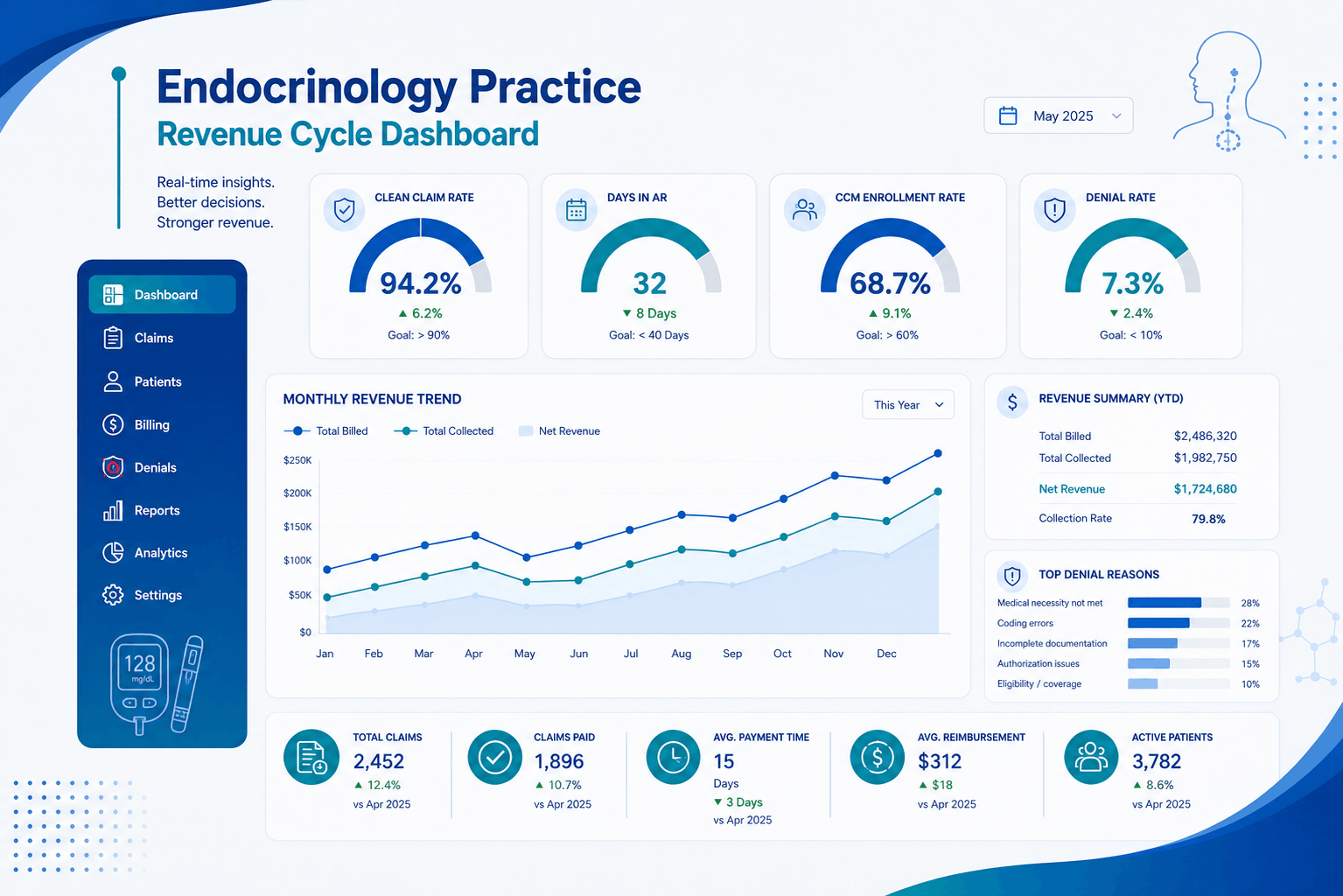
Endocrinology medical billing is too specialized, too code-intensive, and too compliance-heavy for a generalist billing team to manage at the level your practice deserves. The CCM enrollment workflow alone requires a dedicated process. The CGM PA management requires daily attention. The ICD-10 specificity for diabetes complications requires coder training that most general billing teams never receive.
At House of Outsourcing, we’ve built our endocrinology medical billing services around what US endocrinology practices actually need — not what a general billing team can manage on the side.
House of Outsourcing gives your endocrinology practice access to specialty-trained billing experts who understand diabetes, thyroid, adrenal disorders, CCM, CGM, and RPM billing. Our proven workflows reduce denials, improve coding accuracy, integrate with your existing systems, and scale as your practice grows while lowering administrative costs.
| Factor | In-House Billing | House of Outsourcing |
|---|---|---|
| Endocrinology-specific coding expertise | Generalist knowledge | Trained in DM, thyroid, adrenal, CCM, CGM billing |
| CCM program billing | Often not implemented | Full CCM enrollment + monthly billing workflow |
| CGM and RPM billing | Frequently missed or denied | Systematic; PA-first; device code expertise |
| ICD-10 specificity management | Often defaults to unspecified codes | Complication-specific coding on every diabetic patient |
| DEXA frequency tracking | Manual and inconsistent | Patient-level tracking; automatic alerts |
| Denial management | Often written off | Systematic; documentation-backed appeals |
| Cost | Salary + benefits + training | Performance-based % of collections |
| Technology integration | Limited by EHR | Works with your existing EHR and PM system |
| Scalability | Capped by staff headcount | Scales with your practice volume |
Without question, Chronic Care Management (CPT 99490). Most endocrinology patients with diabetes and any comorbidity qualify, yet fewer than 10% of eligible endocrinology practices bill CCM consistently. The revenue opportunity is significant, and the care coordination is already being provided.
Yes, Medicare Part B covers CGM for insulin-treated diabetes, both Type 1 and insulin-dependent Type 2 patients. The prescription must document that the patient is insulin-treated, and prior authorization is required by most Medicare Advantage plans. The device must be ordered through a Medicare-enrolled DME supplier.
Medicare covers HbA1c testing every 3 months for patients with poorly controlled diabetes and every 6 months for well-controlled patients. Billing more frequently than these intervals without documentation of a specific clinical reason will result in denial. Track HbA1c dates per patient to prevent frequency denials.
Yes. CCM (care coordination) and RPM (device data management) can be billed simultaneously for the same patient when both sets of requirements are independently met. An insulin-dependent Type 2 diabetic on a CGM who has two or more chronic conditions can legitimately generate CCM, RPM, and office visit billing in the same month.
Get a free assessment from our billing experts