
Our Pain Management Medical Billing services help practices manage complex procedures, specialty-specific coding, documentation requirements, and payer regulations. We handle accurate claim submission, denial prevention, authorization support, and A/R follow-up to improve reimbursements, reduce revenue loss, and support efficient practice operations.

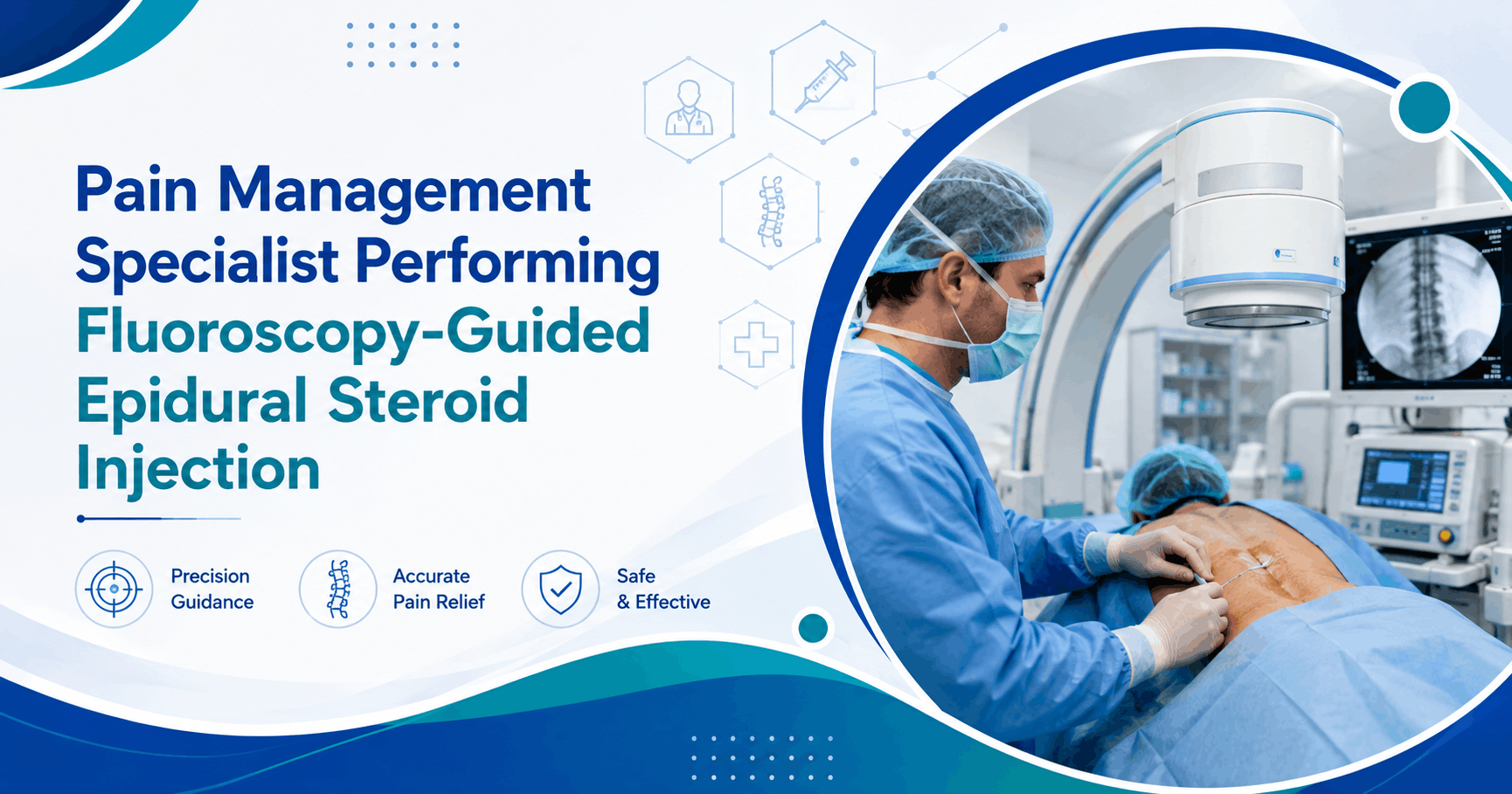
If you run a pain management practice in the United States, you already know that pain management billing services sit at the confluence of two distinctly challenging billing environments; the complex interventional procedures of interventional radiology and spine surgery, and the medication management complexity of chronic disease primary care. Data shows that in the USA chronic pain affects more than 50 million adults in the United States, approximately one in five people and the demand for specialized pain care is growing steadily as the population ages and opioid-alternative interventional treatments become the standard of care.
Out this guide is written specifically for US pain management physicians, interventional pain specialists, anesthesiologists practicing pain medicine, physiatrists, and the billing teams who support them.
Need support with your billing workflow? Explore our medical billing and revenue cycle services or request a free consultation.
Pain management medical billing is the specialized process of converting the full range of pain care services like interventional procedures, nerve blocks, neuromodulation, medication management, and care coordination into accurate CPT, ICD-10, HCPCS, and modifier codes, and submitting those claims to Medicare, Medicaid, commercial insurers, and workers’ compensation carriers for reimbursement.
What makes pain management billing genuinely demanding is the density and interaction of the specialty’s code families. An interventional pain physician performing a comprehensive visit may bill evaluation and management codes, epidural steroid injection codes, fluoroscopy guidance codes, and medication management codes all from the same encounter.
CMS’s introduction of new chronic pain management bundle codes (G3002/G3003) in 2023 adds an additional layer of billing opportunity for pain practices of the USA, but also a new documentation requirement (30-minute monthly time thresholds, comprehensive care plan, informed patient consent) that requires specific billing infrastructure to implement correctly.
�� Pain Management Billing Key Statistics
�� 50+ million US adults affected by chronic pain — approximately 1 in 5 Americans (CDC data)
�� Chronic pain is the leading reason Americans seek medical care and the most common cause of long-term disability
�� Pain management specialty denial rates without specialist billing: 14–22%
�� CMS introduced G3002/G3003 in 2023 for chronic pain management — most pain
practices have not yet implemented these codes, missing $40–$80+/patient/month
�� Prior authorization for interventional procedures is required by >85% of commercial payers
�� Radiofrequency ablation (RFA) is one of the top 5 most-denied pain management procedures — primarily due to insufficient diagnostic block documentation
�� Workers’ compensation accounts for 15–25% of pain management practice revenue and follows separate billing rules from commercial and Medicare
Pain management CPT codes are organized into several major procedure families like epidural injections, facet joint procedures, peripheral nerve blocks, trigger point injections, radiofrequency ablation, spinal cord stimulation, and newer fascial plane block codes. Mastering each family’s internal coding rules and the interaction between families is the foundation of accurate pain management billing services.
Epidural steroid injections are among the highest-volume procedures in pain management. The CPT code selection depends on the approach (interlaminar vs. transforaminal) and the spinal level (cervical/thoracic vs. lumbar/sacral). These are not interchangeable using the wrong approach code is both a billing error and a documentation mismatch that auditors identify immediately.
| CPT Code | Procedure | Level | Guidance Required? | Key Billing Rule |
|---|---|---|---|---|
| 62310 | Injection, epidural — interlaminar, cervical or thoracic | Cervical / Thoracic | Recommended (77003) | Interlaminar approach; document single-level injection; may include steroid, anesthetic, or both |
| 62311 | Injection, epidural — interlaminar, lumbar or sacral | Lumbar / Sacral | Recommended (77003) | Most common epidural code; document level and volume injected; fluoroscopy strongly recommended |
| 62318 | Continuous infusion/bolus — epidural catheter, cervical/thoracic | Cervical / Thoracic | Required for placement | Catheter-based; includes placement and initial injection; document catheter position confirmation |
| 62319 | Continuous infusion/bolus — epidural catheter, lumbar/sacral | Lumbar / Sacral | Required for placement | Same as 62318 at lumbar level; document catheter position and drug administered |
| 64479 | Transforaminal epidural — cervical or thoracic, single level | Cervical / Thoracic | Required (77003) | Transforaminal = nerve root-specific; document nerve root level targeted |
| 64480 | Transforaminal epidural — cervical/thoracic, each additional level | Cervical / Thoracic | Required | Add-on to 64479; document each additional root-level injected separately |
| 64483 | Transforaminal epidural — lumbar or sacral, single level | Lumbar / Sacral | Required (77003) | Most common transforaminal code; document nerve root level (e.g., L4-5 right); laterality essential |
| 64484 | Transforaminal epidural — lumbar/sacral, each additional level | Lumbar / Sacral | Required | Add-on to 64483; bill per additional level; no maximum, but document clinical rationale for multiple levels |
Facet joint procedures and medial branch blocks represent one of the highest-volume categories in pain management billing. The CPT code family (64490–64495) is organized by spinal level and laterality.
| CPT Code | Procedure | Level | Units Rule | Key Billing Note |
|---|---|---|---|---|
| 64490 | Facet joint nerve block — cervical or thoracic, single level | Cervical / Thoracic | Bill per level; -50 for bilateral | Diagnostic or therapeutic; document level (e.g., C4-5 right); fluoroscopy documentation required |
| 64491 | Facet joint nerve block — cervical/thoracic, 2nd level | Cervical / Thoracic | Add-on to 64490 | Each additional level; document each level separately in procedure note |
| 64492 | Facet joint nerve block — cervical/thoracic, 3rd+ level | Cervical / Thoracic | Add-on; bill per additional level | Use for each additional level beyond 2nd; no absolute maximum but document clinical rationale |
| 64493 | Facet joint nerve block — lumbar or sacral, single level | Lumbar / Sacral | Bill per level; -50 for bilateral | Most common facet code; document spinal level (e.g., L3-4 right); fluoroscopy required |
| 64494 | Facet joint nerve block — lumbar/sacral, 2nd level | Lumbar / Sacral | Add-on to 64493 | Each additional lumbar/sacral level; 50% multiple procedure reduction applies |
| 64495 | Facet joint nerve block — lumbar/sacral, 3rd+ level | Lumbar / Sacral | Add-on; per additional level | Document all levels; payers may question clinical necessity for more than 3 levels in single session |
Radiofrequency ablation (RFA) also called medial branch neurotomy is one of the highest-value procedures in pain management, but also one of the most frequently denied. Most commercial payers and Medicare require documentation that at least two prior medial branch blocks (diagnostic facet blocks) produced documented pain relief of at least 50% (some payers require 80%) before they will authorize or reimburse RFA. Without this prerequisite documentation, RFA claims will be denied.
| CPT Code | Procedure | Level | Key Billing Rule |
|---|---|---|---|
| 64633 | Destruction by neurolytic agent — paravertebral facet, cervical/thoracic, single level | Cervical / Thoracic | Most common cervical RFA code; requires prior diagnostic block documentation; fluoroscopy required |
| 64634 | Destruction by neurolytic agent — cervical/thoracic, each additional level | Cervical / Thoracic | Add-on to 64633; bill per additional level; document bilateral with -50 |
| 64635 | Destruction by neurolytic agent — paravertebral facet, lumbar/sacral, single level | Lumbar / Sacral | Most common lumbar RFA code; requires diagnostic block documentation; fluoroscopy required |
| 64636 | Destruction by neurolytic agent — lumbar/sacral, each additional level | Lumbar / Sacral | Add-on to 64635; 50% reduction applies for multiple procedures; document all levels treated |
| CPT Code | Nerve Block | Common Indication | Key Billing Note |
|---|---|---|---|
| 64400 | Trigeminal nerve block | Facial pain, trigeminal neuralgia | Document branch injected (V1/V2/V3); fluoroscopy or US guidance separately |
| 64405 | Greater occipital nerve block | Occipital neuralgia, cervicogenic headache | Can be bilateral; document both sides if bilateral; unilateral requires RT or LT |
| 64408 | Vagus nerve block | Cluster headache, refractory pain | Cervical approach; document clinical indication |
| 64415 | Brachial plexus nerve block — single injection | Shoulder, upper extremity pain | Single-shot block; US guidance code separately (76942) |
| 64416 | Brachial plexus — continuous infusion (catheter) | Post-op upper extremity pain | Catheter placement; includes drug delivery over extended period |
| 64418 | Suprascapular nerve block | Shoulder pain, rotator cuff disease | Document approach and drugs injected; often ultrasound-guided |
| 64420 | Intercostal nerve block — single level | Post-thoracotomy pain, rib fracture | Bill per level injected; multiple levels = 64421 for each additional |
| 64421 | Intercostal nerve block — each additional level | Multiple rib pain levels | Add-on to 64420; document each rib level treated |
| 64425 | Ilioinguinal nerve block | Inguinal pain, post-herniorrhaphy pain | Specify unilateral or bilateral with -50 |
| 64430 | Pudendal nerve block | Pelvic pain, pudendal neuralgia | Document approach (transvaginal, transperineal); US guidance recommended |
| 64445 | Sciatic nerve block — single injection | Sciatica, lower extremity pain | US or fluoroscopic guidance strongly recommended; document approach |
| 64447 | Femoral nerve block — single injection | Anterior thigh pain, post-knee surgery pain | US guidance (76942) commonly used; document nerve location confirmation |
| 64449 | Lumbar plexus nerve block — posterior approach | Lower extremity radiculopathy | Complex block; document approach and needle position confirmation |
| 64450 | Peripheral nerve block — other | Non-specific peripheral nerve | Use when no specific code applies; specify nerve in procedure note |
| 64455 | Plantar common digital nerve block | Morton's neuroma | Document interspace injected (2nd-3rd or 3rd-4th) |
| 64488 | Transversus abdominis plane (TAP) block — bilateral | Abdominal pain, post-abdominal surgery | Bilateral bilateral code; US guidance (76942) required; document bilateral approach |
| 64489 | TAP block — unilateral | Unilateral abdominal pain | RT or LT modifier required; document US-guided approach |
| CPT Code | Procedure | Key Billing Rule |
|---|---|---|
| 20552 | Injection — single or multiple trigger points, 1 or 2 muscles | One unit covers the entire session regardless of number of injections into 1 or 2 muscles; document which muscles injected |
| 20553 | Injection — trigger points, 3 or more muscles | Use when 3+ distinct muscles are injected; document each muscle specifically by name |
| 20560 | Dry needling — 1 or 2 muscles | Needle insertion without injection; document each muscle treated; verify payer coverage — not all plans cover dry needling |
| 20561 | Dry needling — 3 or more muscles | 3+ muscle session; one unit covers entire session; document all muscles treated; verify state licensure for practitioner |
Spinal cord stimulation represents the highest-value procedure category in interventional pain management. SCS involves a multi-stage billing pathway: trial phase, permanent implant, and programming/follow-up. Each stage has distinct CPT codes, and the full procedure generates significant revenue when correctly billed. However, it also requires intensive prior authorization and specific documentation of conservative care failure.
| CPT Code | SCS Service | Stage | Key Billing Note |
|---|---|---|---|
| 63650 | Percutaneous implantation of neurostimulator electrode array | Trial or permanent — percutaneous | Most common SCS lead placement code; document trial vs. permanent in procedure note |
| 63655 | Laminectomy for implantation of neurostimulator electrode array — paddle | Permanent — surgical (paddle lead) | Open surgical placement; higher complexity; 90-day global period |
| 63685 | Insertion of spinal neurostimulator pulse generator — subcutaneous | Permanent implant | Pulse generator/IPG placement; bill separately from lead placement |
| 63688 | Revision or removal of implanted spinal neurostimulator electrode | Revision | Bill when lead revision is performed; document reason for revision |
| 63661 | Removal of spinal neurostimulator electrode | Removal | Document reason for explant |
| 63663 | Revision of implanted spinal neurostimulator electrode | Revision | Lead revision without removal; document technique |
| 95970 | Electronic analysis of neurostimulator — without programming | SCS check — no programming | Office visit to assess function without programming changes |
| 95971 | Programming of SCS — simple | First 15 minutes of SCS programming | Time-based; document programming parameters changed and time spent |
| 95972 | Programming of SCS — complex | First 15 minutes of complex programming | Complex multi-array or rechargeable systems; document system type and parameters |
| 95973 | Programming add-on — each additional 15 minutes | Add-on to 95971/95972 | Document total programming time; bill per additional 15-minute increment |
| 0338T | High-frequency SCS trial (10 kHz) | Category III — newer technique | High-frequency; temporary Category III code; not all payers cover; verify before billing |
Fluoroscopy guidance is separately billable when used during interventional pain procedures, but only when three conditions are met: the fluoroscopy was actually used (not merely available), the image was stored and documented, and the clinical record supports its medical necessity. Missing fluoroscopy guidance codes is one of the most common revenue gaps in pain management billing. Incorrectly billing guidance when documentation is insufficient is one of the most common compliance errors.
| CPT Code | Guidance Type | When to Bill | Key Documentation Rule |
|---|---|---|---|
| 77003 | Fluoroscopic guidance and localization of needle or catheter tip | Epidural injections, facet blocks, nerve blocks, joint injections | Document: fluoroscopy used, contrast injection performed, image storage, final needle position confirmed on image |
| 77012 | Computed tomographic guidance — needle placement | CT-guided procedures (disc procedures, targeted biopsies) | Requires CT scan during procedure; image storage mandatory; document guidance type explicitly |
| 76942 | Ultrasound guidance — needle placement with imaging documentation | US-guided nerve blocks (TAP, femoral, brachial plexus, etc.) | Document real-time US imaging used; image storage required; document probe position and needle visualization |
| 77021 | MRI guidance — needle placement | MRI-guided procedures (rare in pain; more common in radiology) | MRI documentation; typically in radiology not pain management |
⚠️ ⚠️ Fluoroscopy Guidance Billing Compliance Rule
Fluoroscopy guidance (77003) is one of the top 5 most-audited codes in pain management.
CMS and commercial payer auditors specifically look for the following when reviewing 77003 claims:
✔ Was fluoroscopy actually used? (not just available in the room)
✔ Was contrast injected to confirm needle position?
✔ Was the fluoroscopic image stored as part of the medical record?
✔ Does the procedure note explicitly document fluoroscopic guidance with image documentation?
Missing any of these elements makes the 77003 claim indefensible on audit.
The phrase ‘fluoroscopy used for guidance’ is insufficient — specify:
‘Fluoroscopic guidance used throughout the procedure. Contrast injection confirmed
needle position in the [epidural space / neural foramen / facet joint].
Fluoroscopic images were obtained and stored as part of the permanent medical record.
| CPT Code | Joint Injected | Laterality Rule | Documentation Required |
|---|---|---|---|
| 20610 | Aspiration and/or injection — major joint (knee, shoulder, hip) | RT or LT for unilateral; -50 for bilateral same session | Document joint, agent injected (steroid, viscosupplement, anesthetic), volume, and technique |
| 20611 | Injection — major joint, with ultrasound guidance and permanent recording | RT or LT | US guidance included in code; document real-time US imaging; image storage is implicit in 20611 |
| 20605 | Injection — intermediate joint (elbow, wrist, ankle, temporomandibular) | RT or LT | Document specific joint; distinguish from 20610 (major) by joint type |
| 20606 | Injection — intermediate joint, with ultrasound guidance | RT or LT | US guidance included; same documentation as 20611 |
| 20600 | Injection — small joint (finger, toe, carpal, tarsal) | Specify digit or joint | Document specific small joint; multiple small joints on same day billed per joint |
| 27096 | Injection — sacroiliac joint | RT or LT; -50 for bilateral | Sacroiliac joint; fluoroscopy (77003) required per most payer guidelines |
| 20550 | Injection — tendon sheath, ligament | Document specific tendon/ligament site | Distinguish from trigger point injection; tendon sheath vs. muscle belly |
| 20551 | Injection — tendon origin or insertion | Document attachment site | Plantar fascia, patellar tendon, etc.; ultrasound guidance strongly recommended |
CMS introduced chronic pain management (CPM) codes G3002 and G3003 in January 2023, creating a new monthly billing opportunity for pain management practices that provide ongoing care coordination to patients with chronic pain. These codes represent one of the most significant new revenue opportunities for pain practices, yet most practices have not implemented them, leaving $40–$120 per patient per month in uncaptured revenue.
| HCPCS Code | Service | Time Threshold | Monthly Revenue (Approx.) | Key Requirements |
|---|---|---|---|---|
| G3002 | Chronic pain management and treatment — first 30 minutes per month | 30 minutes minimum per calendar month | ~$70–$95/patient/month (Medicare) | Licensed MD/DO must personally perform; patient consent required; comprehensive chronic pain care plan; chronic pain = ≥3 months duration |
| G3003 | Each additional 15 minutes beyond G3002 | 15-minute increments after first 30 min | ~$35–$47/additional 15 min | Add-on to G3002; document total cumulative time; same session or subsequent dates in same month |
ICD-10 diagnosis code selection in pain management billing is especially important because many interventional procedures are conditionally covered by payers based on the specific diagnosis code used. An epidural steroid injection for acute disc herniation has different coverage rules than the same injection for chronic axial low back pain.
| ICD-10 Code | Condition | Notes for Pain Billing |
|---|---|---|
| G89.29 | Other chronic pain | Non-specific; use when no specific pain syndrome code exists; pair with underlying diagnosis |
| G89.21 | Chronic pain due to trauma | Post-traumatic chronic pain; requires documentation of traumatic event |
| G89.28 | Other chronic postprocedural pain | Post-surgical chronic pain syndrome; document the original procedure |
| G89.4 | Chronic pain syndrome | Comprehensive chronic pain with functional/psychological components; supports CPM billing (G3002) |
| G90.511 | Complex regional pain syndrome (CRPS) I — upper right limb | Specify limb and laterality; CRPS requires specific clinical criteria documentation |
| G90.512 | CRPS I — upper left limb | Laterality specific; document using Budapest Criteria |
| G90.521 | CRPS I — lower right limb | Lower extremity CRPS; document autonomic, sensory, and motor findings |
| G90.522 | CRPS I — lower left limb | Laterality specific; Budapest Criteria documentation |
| G90.59 | CRPS I — other specified site | When CRPS involves trunk or unspecified extremity |
| ICD-10 Code | Condition | Pain Management Billing Context |
|---|---|---|
| M54.5 / M54.50–M54.59 | Low back pain (various types) | M54.51 = vertebrogenic (structural); M54.59 = other; avoid generic M54.5 when more specific code available |
| M51.16 | Intervertebral disc degeneration — lumbar region | Lumbar DDD; supports epidural injections and RFA when combined with facet arthropathy |
| M51.17 | Intervertebral disc degeneration — lumbosacral region | Lumbosacral level degenerative disease |
| M48.061 | Spinal stenosis — lumbar region with neurogenic claudication | Supports lumbar epidural steroid injection for stenosis-related claudication |
| M47.812 | Spondylosis with radiculopathy — cervical region | Cervical radiculopathy from degenerative disease; supports cervical epidural injections |
| M46.96 | Facet arthropathy — lumbar region (inflammatory) | Supports facet joint injections (64493) and lumbar RFA (64635) |
| M53.82 | Facet syndrome / dorsopathy — cervical region | Cervical facet syndrome; supports 64490 and cervical RFA (64633) |
| M47.816 | Spondylosis without myelopathy — lumbar region | Lumbar DDD without neurological compromise; supports conservative interventional management |
| M54.2 | Cervicalgia | Neck pain; secondary diagnosis with specific cervical pathology codes |
| M54.3 | Sciatica | Radicular pain to lower extremity; supports lumbar transforaminal ESI (64483) |
| M79.3 | Panniculitis | Subcutaneous fat inflammation; less common pain diagnosis |
| G54.3 | Thoracic root disorders | Thoracic radiculopathy; supports thoracic epidural injections |
| ICD-10 Code | Condition | Pain Management Billing Context |
|---|---|---|
| G43.909 | Migraine, unspecified — without status migrainosus | Common headache diagnosis; specify type when possible (episodic vs. chronic, with/without aura) |
| G44.309 | Post-traumatic headache — unspecified | Post-concussive headache; document trauma history and chronicity |
| G44.221 | Chronic tension-type headache, intractable | Chronic daily headache; supports occipital nerve block (64405) and BOTOX (J0585 + 64615) |
| G50.0 | Trigeminal neuralgia | Classic trigeminal neuralgia; supports trigeminal nerve block (64400) |
| G52.8 | Other disorders of specified cranial nerves | When specific cranial nerve is involved in pain but no specific code exists |
| M54.81 | Occipital neuralgia | Supports occipital nerve block (64405); document Tinel's sign and radiation pattern |
| G43.711 | Chronic migraine with aura, intractable | Complex migraine; may support BOTOX for chronic migraine (HCPCS J0585) |
Tip #1 — Always Code the Underlying Diagnosis Alongside the Pain Code
One of the most important pain management ICD-10 rules: the specific pathology code should
always accompany or replace non-specific pain codes on interventional procedure claims.
Wrong approach: 64483 linked to M54.5 (low back pain) only
Better approach: 64483 linked to M51.16 (lumbar DDD) + M54.3 (sciatica) + G89.29 (chronic pain)
The more specific diagnosis codes provide the clinical rationale for the intervention.
M54.5 alone rarely satisfies medical necessity criteria for interventional procedures,
payers want to see the structural diagnosis that explains why the intervention is indicated.
For RFA claims especially: the facet arthropathy code (M46.96 for lumbar) or facet syndrome
code (M53.82 for cervical) is essential — without it, the RFA lacks a diagnosis that specifically
implicates the facet joint as the pain source.
Pain management billing modifiers are essential for communicating the specific circumstances of a procedure, ensuring accurate reimbursement for your practice, while reducing claim denials.
| Modifier | When Required in Pain Management Billing | Documentation Required | Common Error |
|---|---|---|---|
| RT | Right side — unilateral right-side procedure | Procedure note specifying right side of body | Missing on nerve blocks, facet injections, joint injections performed on right side only |
| LT | Left side — unilateral left-side procedure | Procedure note specifying left side | Missing on left-sided procedures; required for laterality compliance |
| -50 | Bilateral procedure — same procedure both sides same session | Procedure note documenting bilateral approach | Billing procedure code twice on separate lines instead of once with -50; causes CO-97 |
| -59 | Distinct procedural service — separate from bundled service | Documentation showing clinical distinctness of each service | Overusing as catch-all; NCCI check required before applying |
| -25 | Separately identifiable E/M on day of procedure | Complete, standalone E/M note independent of procedure note | Applying -25 to every procedure visit without separately documented E/M service |
| -51 | Multiple procedures, same session | All procedures documented in procedure note | Applying -51 to primary procedure; applies only to secondary codes |
| -76 | Repeat procedure by same physician, same day | Clinical justification for repeating procedure same day | Not documenting why procedure was repeated; rare in pain management |
| -77 | Repeat procedure by different physician, same day | Both physicians documented; clinical reason for repeat | Failure to use when second physician performs same procedure |
| -TC | Technical component only | Practice owns imaging equipment; professional component billed by radiologist separately | Billing full global when only technical component is provided |
| -26 | Professional component only | Physician provides interpretation only; technical component elsewhere | Missing when physician reads imaging study performed at another facility |
| GY | Non-covered service — statutory Medicare exclusion | Service is known Medicare exclusion (e.g., some acupuncture beyond covered indications) | Not appending when billing Medicare for known non-covered services |
| AT | Active treatment — chiropractic (sometimes used for manipulation in pain settings) | Document active treatment status | Misapplying chiropractic modifier to physician pain management services |
Prior authorization is the dominant revenue cycle challenge in your pain management billing. Unlike primary care or many surgical specialties, nearly every major interventional pain procedure requires PA from commercial payers and Medicare Advantage plans. The AMA’s 2024 Prior Authorization Survey found that pain management and anesthesiology specialists face among the highest PA burdens in medicine, with some practices spending 15–20 staff hours per physician per week on authorization management alone.
| Procedure Category | PA Required? | Average Approval Time | Key Documentation for PA Approval |
|---|---|---|---|
| Epidural steroid injections (62311, 64483) | Yes — commercial + MA; not Medicare FFS | 3–10 business days | MRI or CT confirming herniation/stenosis; specific radicular symptoms; failed conservative care (NSAIDS, PT, chiropratic × 4–6 weeks) |
| Facet joint injections (64490–64495) | Yes — commercial + MA | 3–10 business days | CT/MRI or clinical exam supporting facet joint pain; failed conservative care; symptom duration ≥ 6 weeks |
| Radiofrequency ablation (64633–64636) | Yes — commercial + MA; intensive | 5–14 business days | Prior diagnostic blocks × 2 with documented ≥50% relief; specific level documentation; chronic pain duration ≥ 3 months |
| Spinal cord stimulation — trial | Yes — very intensive PA | 14–30 business days | Failed back surgery syndrome (FBSS) or intractable pain diagnosis; failed conservative management; psychological evaluation; functional assessment |
| SCS — permanent implant | Yes — requires trial success documentation | 7–21 business days | Trial success = ≥50% pain relief during trial; patient preference for permanent; psychological clearance |
| Trigger point injections (20552/20553) | Sometimes — varies by plan | 1–5 business days | Myofascial pain diagnosis; specific muscles involved; failed conservative care (stretching, massage, PT) |
| Peripheral nerve blocks (64400–64489) | Sometimes — varies by plan and nerve | 1–7 business days | Specific neuropathic diagnosis; nerve involvement documented; imaging or EMG supporting nerve pathology |
| Spinal cord stimulator programming | Rarely required | Same day — not typically required | Device documentation; patient enrolled in device care |
Tip 2 — The Conservative Care Documentation Template for Pain PA
The main reason pain management prior authorization requests are denied on first submission
is vague or absent documentation of failed conservative care. Every pain management PA
submission should include a standardized conservative care failure summary:
✔ Physical therapy: dates of service, number of sessions, specific diagnosis treated, outcome
✔ Medications: specific drugs tried, doses, duration, and documented insufficient response
✔ Chiropractic or manipulation (if relevant): dates, sessions, outcome
✔ Imaging: MRI or CT report with specific pathology correlated to pain complaint
✔ Duration: pain duration (must typically be ≥ 6 weeks for ESI; ≥ 3 months for RFA)
✔ Pain scores: pre-treatment NRS or VAS establishing pain severity
are
We know your pain management practice operates under one of the most complex compliance environments in American medicine. In addition to standard CMS billing compliance requirements, pain management physicians face oversight from the DEA (for controlled substance prescribing), state Prescription Drug Monitoring Programs (PDMPs), FDA (for specific devices), and increasingly stringent CMS documentation standards for interventional procedures. Understanding this compliance landscape protects your practice financially and legally.
| Regulatory Requirement | Governing Body | Pain Management Application | Billing Impact |
|---|---|---|---|
| False Claims Act compliance | DOJ / CMS | Prohibits fraudulent billing — upcoding, billing for services not rendered, improper use of modifiers | All pain management claims must accurately reflect services provided; no billing for procedures not performed |
| Anti-Kickback Statute | OIG | Prohibits improper financial relationships that influence referrals — relevant to DME, pharmacy, and PT referrals from pain practices | Implant device relationships with vendors must comply with safe harbors; no kickbacks for patient referrals |
| HIPAA Privacy and Security | CMS / HHS | Protects patient information in billing records, communications, and practice management systems | Billing systems must be HIPAA-compliant; any breach of pain patient data creates significant liability |
| Controlled Substance prescribing regulations | DEA / CDC | DEA Schedule II-III prescribing requirements; state PDMP access requirements; CDC prescribing guidelines for opioids | Documentation of prescriptions in medical record supports billing; PDMP documentation required in many states |
| Medicare Anti-Fraud requirements | CMS / OIG | Documentation must support medical necessity; cannot bill for services not documented | All interventional procedures must be individually documented with clinical justification |
| State medical board requirements | State agencies | State-specific standards for pain management practice, including opioid prescribing limits | State-specific documentation standards may exceed Medicare minimums; billing must align with state law |
| Audit Trigger | Why It Flags the Practice | Prevention Protocol |
|---|---|---|
| Fluoroscopy guidance (77003) billed without documented image storage | Image storage is a mandatory element of 77003; billing without storage evidence is an automatic audit finding | Include explicit image storage statement in every fluoroscopy-guided procedure note |
| RFA without documented diagnostic block responses | CMS and commercial payers consistently deny/recoup RFA without prior diagnostic block documentation | Implement standardized pre/post NRS documentation at every diagnostic block visit; keep in patient file |
| Bilateral procedures billed as two separate lines instead of using -50 | Payer flags as duplicate billing; generates CO-97 or CO-18 (duplicate) denial | Pre-submission scrubbing rule: bilateral pain procedures require -50, not two lines |
| E/M code upcoding — 99215 on >40% of procedure visits | Statistical outlier; E/M distribution that is implausibly high for a procedure-heavy practice | Quarterly E/M distribution audit; documentation training for MDM-based code selection |
| Trigger point injections billed without specific muscle documentation | Documentation must name each muscle injected; 'trigger point injection × 3 muscles' is insufficient | Procedure note must list muscle names: 'trigger point injections administered to left upper trapezius, right levator scapulae, and bilateral rhomboids' |
| G3002 billed without comprehensive care plan or patient consent | CPM codes require written patient consent and care plan as foundational documentation | Implement CPM enrollment workflow with consent form and care plan template before first billing month |
| Epidural injection frequency exceeding payer limits | Most payers limit ESI to 3–4 injections per year per spinal region; exceeding generates automatic denial | Track injection frequency by patient, region, and payer; flag approaching limits before scheduling |
Tip 3 — Epidural Injection Frequency Tracking System
Most commercial payers and some Medicare Advantage plans limit epidural steroid injections
to 3–4 injections per spinal region per calendar year. Exceeding this limit generates automatic
denials that are extremely difficult to appeal. Yet many pain practices do not systematically
track injection frequency, discovering the limit has been exceeded only after the claim is denied.
You ne+
ed to build a frequency tracking dashboard in your practice management system that flags:
This single system prevents some of the most frequently occurring and least recoverable
denials in pain management billing
Effective pain management denial management identifies the root causes of rejected claims, corrects documentation or coding errors, and ensures timely appeals for maximum reimbursement. Our proactive denial prevention strategy help you recover lost revenue, improve cash flow, and maintain a healthier revenue cycle for your practice.
| Denial Code | Common Pain Management Root Cause | Recovery Strategy | Expected Overturn Rate |
|---|---|---|---|
| CO-50 / Medical Necessity | Insufficient documentation of conservative care failure before injection | Appeal with complete medical necessity package: imaging, PT records, medication history, pain scores | 70–80% with complete documentation |
| CO-97 / Bundling | Fluoroscopy guidance billed with procedure that doesn't qualify; or bilateral coded as two lines | Correct claim or appeal with clinical rationale for distinct procedure; bilateral fix is straightforward corrected claim | High — 80–90% on corrected claim |
| CO-15 / No Authorization | Interventional procedure performed without PA or PA expired | Retroactive auth if clinically urgent; appeal with clinical urgency documentation for emergent cases | Low-Moderate — 30–50% |
| RFA Denial — Prior Blocks Not Documented | RFA claim submitted without evidence of 2 prior diagnostic blocks with ≥50% relief | Appeal with complete diagnostic block history: dates, NRS scores pre/post each block, clinical notes | Moderate — 55–70% with complete block documentation |
| CO-11 / Diagnosis Mismatch | Non-specific pain code used (M54.5) for interventional procedure requiring specific pathology | Correct claim with specific structural diagnosis code + pain code combination | High — 85–95% on corrected claim with specific ICD-10 |
| CO-4 / Modifier Error | Bilateral procedure coded as two lines without -50; or wrong modifier applied | Corrected claim with -50 modifier or appropriate modifier correction | Very High — 90–95% on corrected resubmission |
| Frequency Limit Exceeded | More than allowed number of injections per region per year | Limited appeal options; provide clinical evidence of exceptional circumstances; consider peer-to-peer | Low — 20–30% unless exceptional clinical rationale |
| CPM G3002 Denial — Documentation | Monthly chronic pain management time not documented; care plan missing | Corrected claim with time documentation and care plan attached; ensure physician performed service | Moderate — 55–65% with amended documentation |
Monitoring key revenue cycle benchmarks helps your pain management practice measure financial performance, identify inefficiencies, and optimize collections. Tracking metrics such as clean claim rate, denial rate, days in A/R, and net collection rate enables data-driven decisions that improve profitability and long-term practice growth.
| KPI | Industry Benchmark | Pain Management Context |
|---|---|---|
| First-Pass Claim Acceptance Rate | ≥ 95% | Pain management average without specialist billing: 76–83%; fluoroscopy guidance errors and missing modifiers are primary drivers |
| Net Collection Rate | ≥ 95% | Workers' compensation and high-deductible plans require active patient balance management alongside insurance AR |
| Days in Accounts Receivable | < 35 days | PA-pending cases can artificially inflate AR; track PA-pending separately from clean-submitted claims |
| Denial Rate | < 6% | Pain average: 14–22%; RFA denials, ESI medical necessity, and fluoroscopy guidance documentation errors drive most denials |
| Prior Authorization Approval Rate (First Pass) | > 82% | Below 65% indicates PA documentation templates need systematic improvement |
| CPM (G3002) Revenue Capture | Monthly billing for all eligible patients | Most pain practices bill G3002 for 0–10% of eligible patients; achievable target is 60–75% |
| RFA Approval Rate | ≥ 80% | Below 65% indicates diagnostic block documentation is inconsistent; implement standardized pre/post NRS forms |
More pain management practices are outsourcing billing services to reduce administrative burden, improve claim accuracy, and keep up with evolving payer and compliance requirements. Partnering with experienced billing specialists leads to faster reimbursements, fewer denials, lower operating costs, and more time to focus on delivering quality patient care.
| Metric | In-House / Generalist Average | After Pain Management Billing Specialist | Improvement |
|---|---|---|---|
| Initial Denial Rate | 16–22% | 4–8% | ~65% reduction |
| First-Pass Acceptance Rate | 76–83% | 92–97% | +12–20 percentage points |
| Days in Accounts Receivable | 50–65 days | 28–40 days | 30–40% improvement |
| Net Collection Rate | 82–88% | 94–98% | +10–16 percentage points |
| RFA PA Approval Rate (First Pass) | 52–62% | 78–88% | ~35% improvement |
| CPM (G3002) Revenue Capture | 0–15% of eligible patients | 55–75% of eligible patients | 4–5× improvement |
| Fluoroscopy Guidance Capture Rate | 75–82% | 97–99% | +17–22 percentage points |
Fluoroscopy guidance (CPT 77003) is separately billable when used during interventional pain procedures, but it is also one of the most frequently audited codes in pain management because auditors specifically look for the documentation elements that prove guidance was actually used, not merely available in the procedure room.
Radiofrequency ablation (CPT 64633–64636) for facet joint pain is denied on first submission approximately 35–45% of the time, almost always because the diagnostic block documentation is insufficient to establish that the facet joint is the confirmed pain generator. Understanding exactly what payers require, and building a standardized documentation system around those requirements, dramatically improves RFA approval rates.
G3002 and G3003, introduced by CMS in January 2023, represent the most significant new billing opportunity for pain management practices in years. These HCPCS codes allow pain physicians to bill for the monthly chronic pain management services they were already providing, care plan management, pain assessment, medication review, care coordination, but previously had no way to capture in a billing code.
The service must be personally performed by a licensed MD or DO not a nurse practitioner, physician assistant, or other non-physician provider acting independently. This is a critical distinction from Chronic Care Management (CCM), where clinical staff can provide a portion of the service. G3002 is physician-directed care.
Get a free assessment from our billing experts